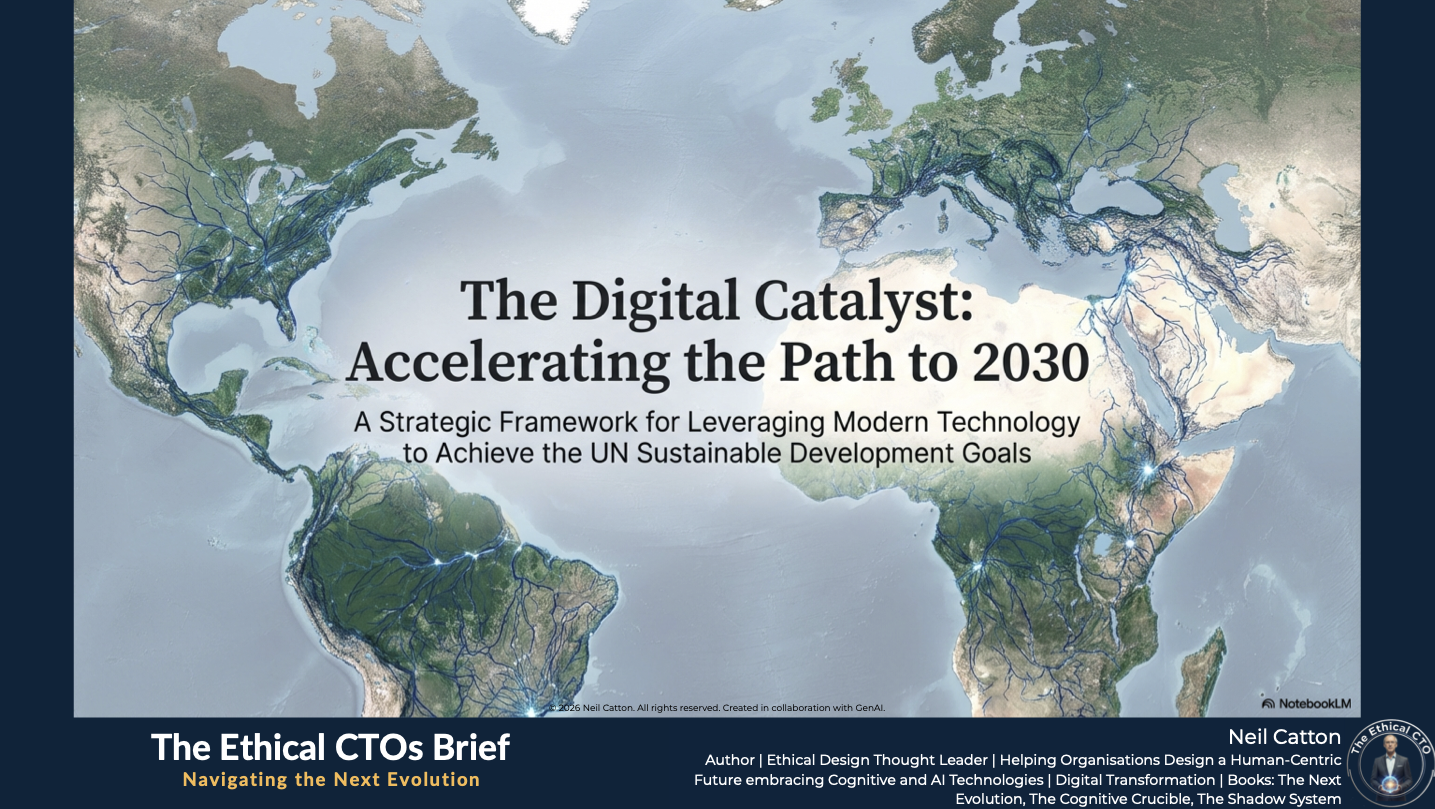
The Digital Catalyst
Can Technology Actually Save the 2030 Agenda?
In the definitive ARC1 instalment Catalyst for Change, I present a rigorous architectural framework for driving non-linear organisational transformation. Moving beyond traditional change management, I introduce the concept of "Systemic Ignition", a methodology for identifying and activating the precise structural levers that accelerate cultural and operational shifts. This work argues that sustainable change is not a top-down mandate, but a designed property of a coherent organisational architecture.
By synthesising behavioural economics with systems engineering, this text provides executive leaders with the tools to engineer environments where innovation is reflexive and resistance is pre-emptively integrated.
A Global Roadmap at a Critical Juncture
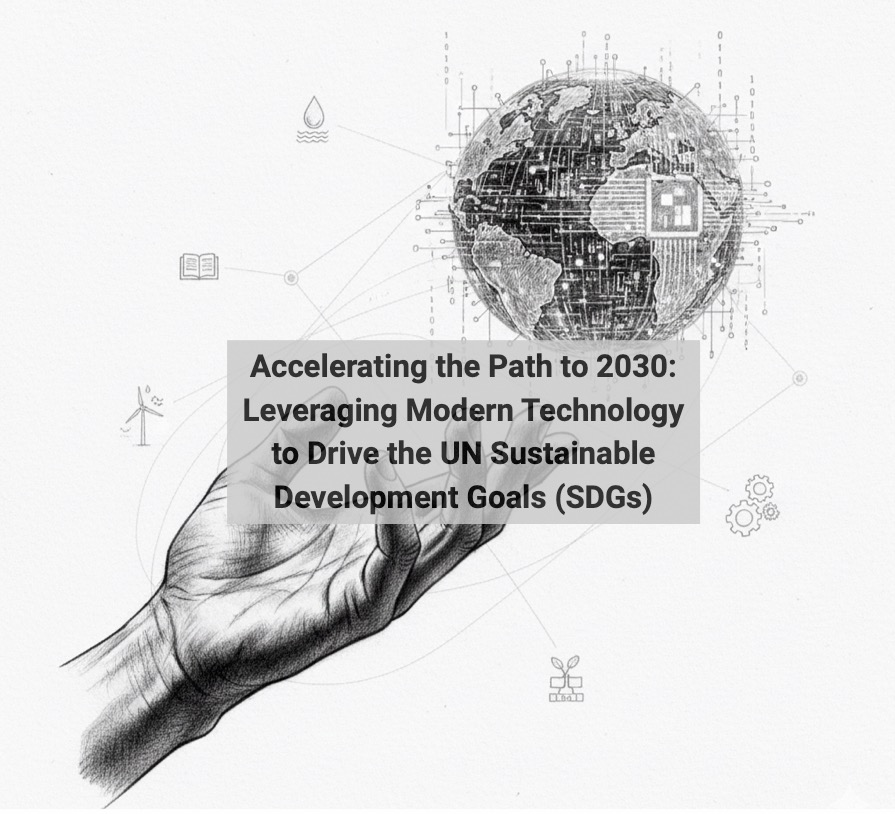
Adopted in 2015, the UN Sustainable Development Goals (SDGs) provide a comprehensive global blueprint for achieving peace, prosperity, and ecological health for everyone by 2030. This ambitious set of 17 interconnected goals tackles a wide range of issues including eradicating extreme poverty, promoting inclusive quality education, ensuring urgent climate action, and building resilient infrastructure. Achieving this vision demands a global revolution in resource management operational strategy and collaborative governance.
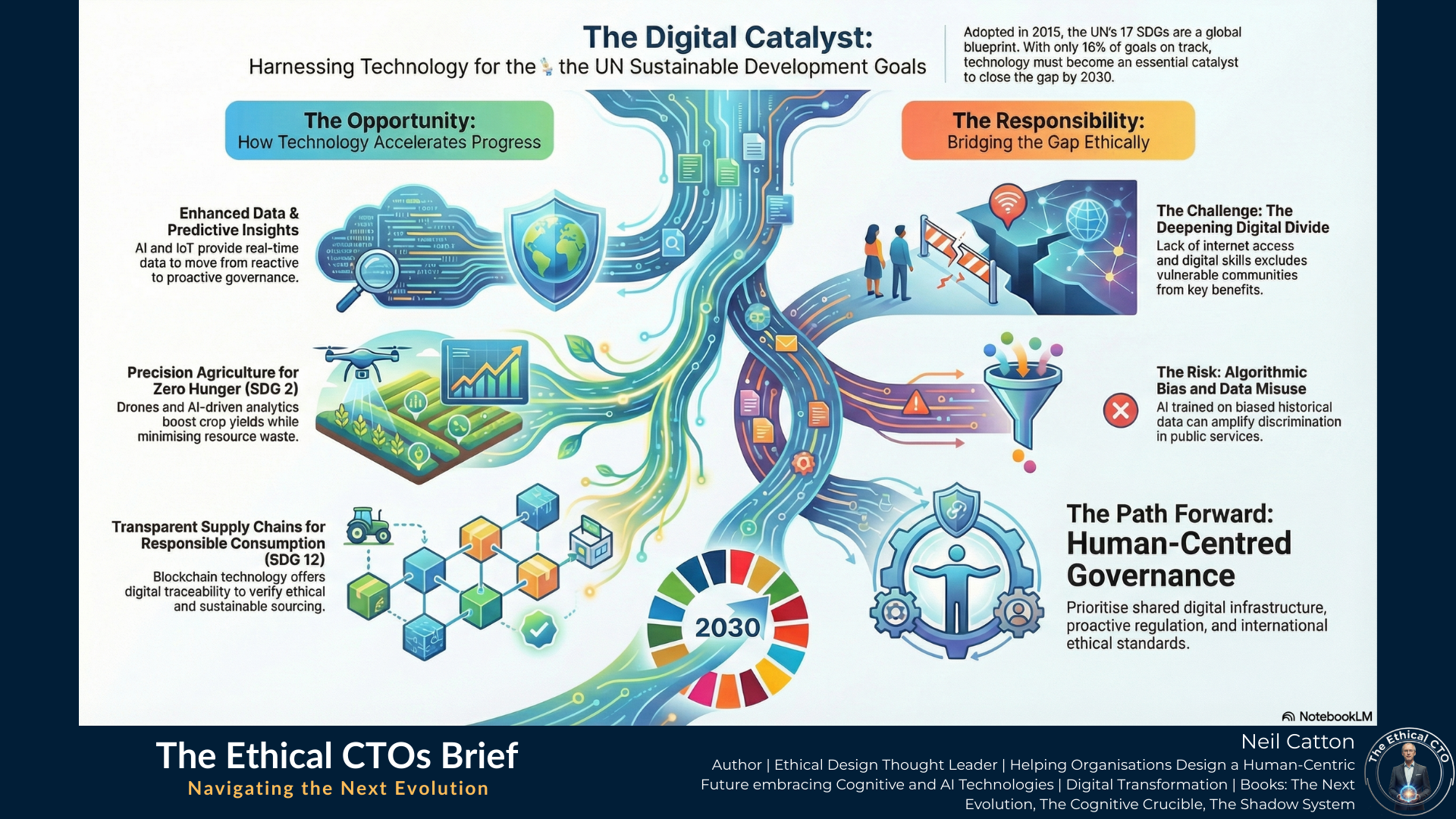
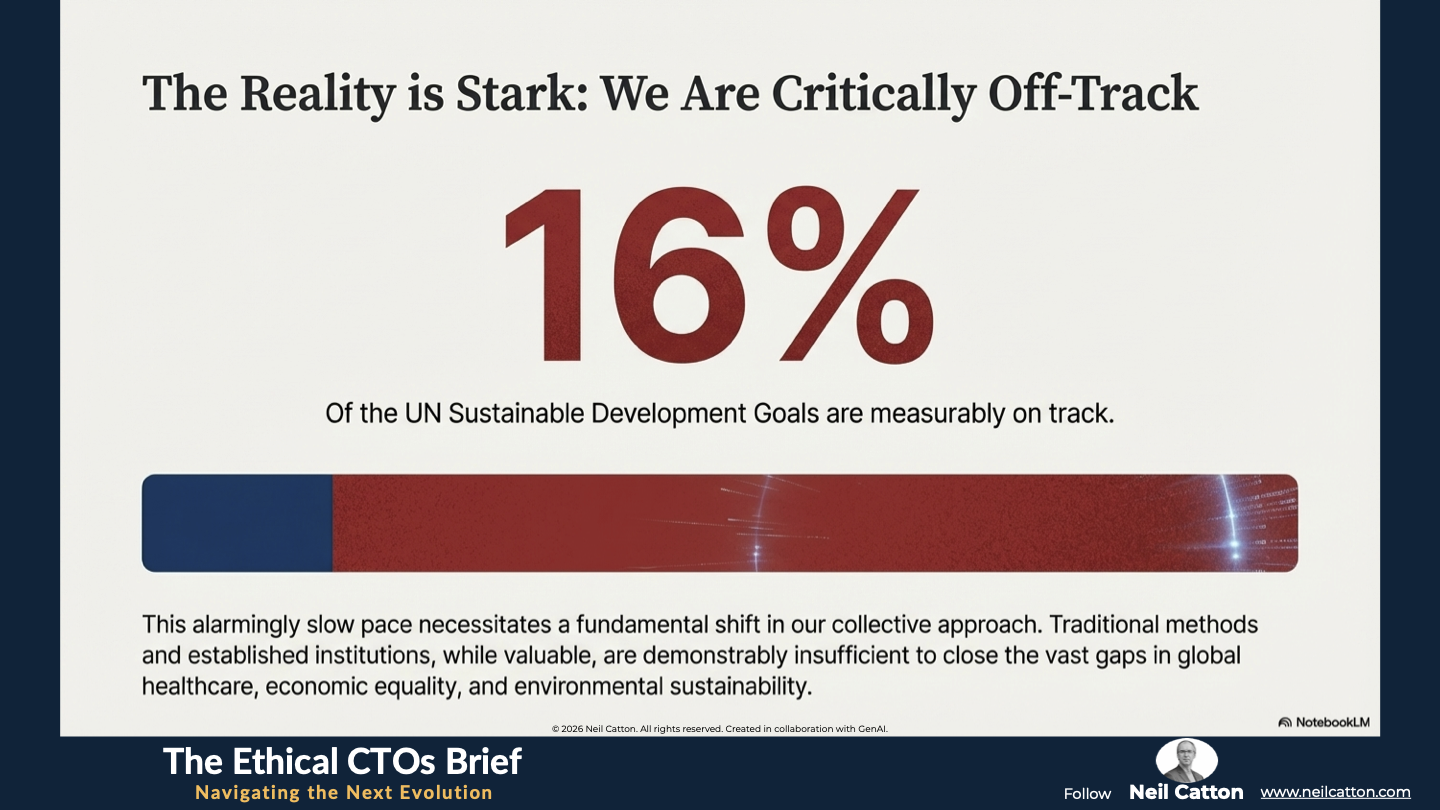
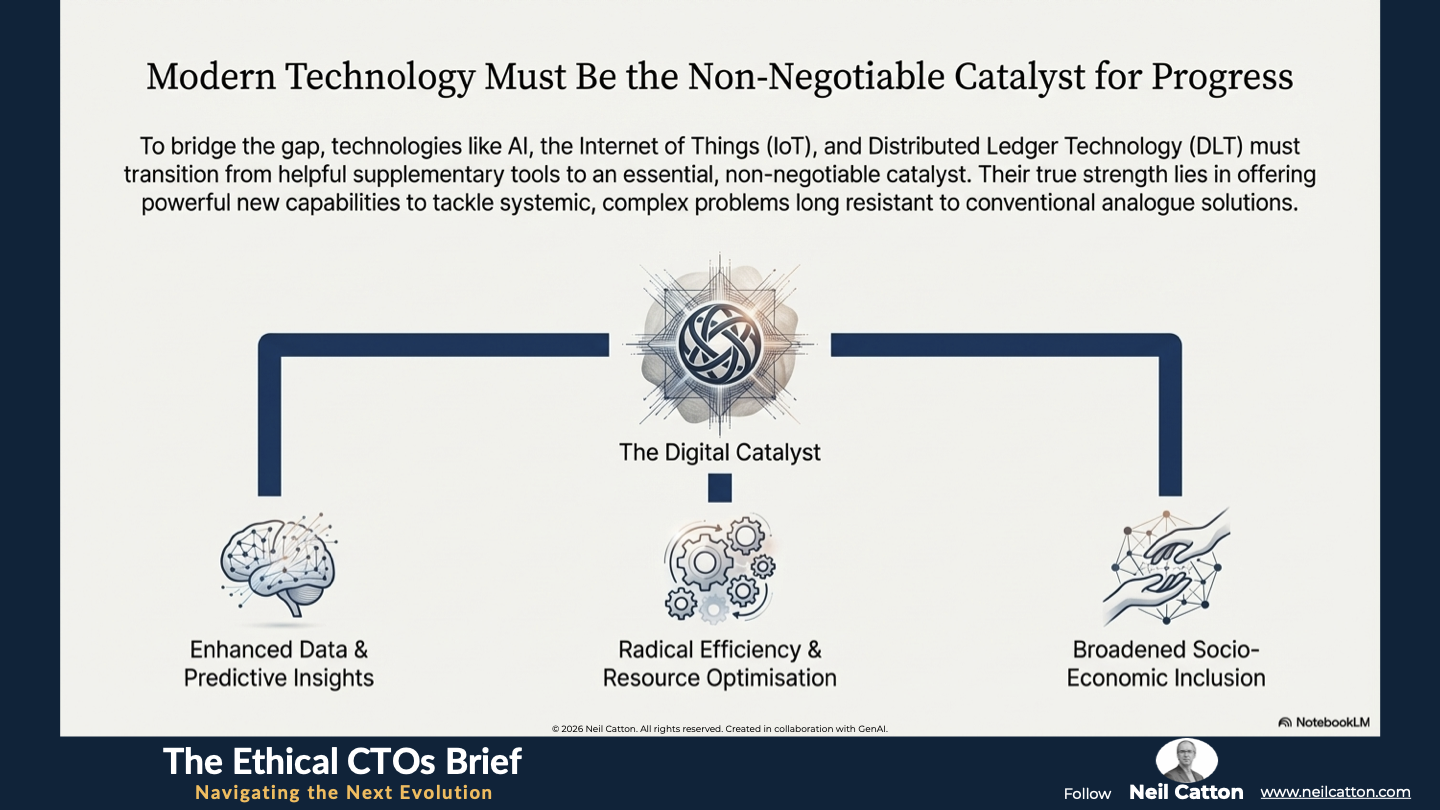
The Sustainable Development Goals (SDGs) are designed to be indivisible. Progress in one area like gender equality (SDG 5) critically supports progress in others such as clean water and sanitation (SDG 6). However, as we approach the final years of this crucial decade, the reality is stark and demands action. Currently only 16% of the goals are measurably on track. This alarmingly slow pace necessitates a fundamental shift in our collective approach. While traditional methods and established institutions are valuable, they are demonstrably insufficient to close the vast gaps in global healthcare, economic equality, and environmental sustainability that persist worldwide. This realisation means modern technology – from sophisticated Artificial Intelligence (AI) and distributed ledger technologies like blockchain to the ubiquitous Internet of Things (IoT) – must transition from a helpful supplementary tool to an essential non-negotiable catalyst for progress.
This article delves into the profound significance, vast opportunities and substantial ethical challenges of harnessing digital innovation to effectively support the UN Sustainable Development Goals. It outlines best practices for responsible implementation worldwide, ensuring technology truly delivers genuine and equitable value.
The Transformative Potential: Data, Efficiency, and Inclusion
Achieving the Sustainable Development Goals by 2030 requires unprecedented innovative thinking and cross-sector collaboration. While technology is often wrongly seen as a universal solution, its true strength lies in offering powerful new capabilities to tackle systemic complex problems long resistant to conventional analogue solutions. Examining its impact across three interconnected pillars – enhanced data gathering, radical efficiency gains and broadened socio-economic inclusion – reveals the transformative potential of modern technology.
Data and Predictive Insights: Seeing the Unseen
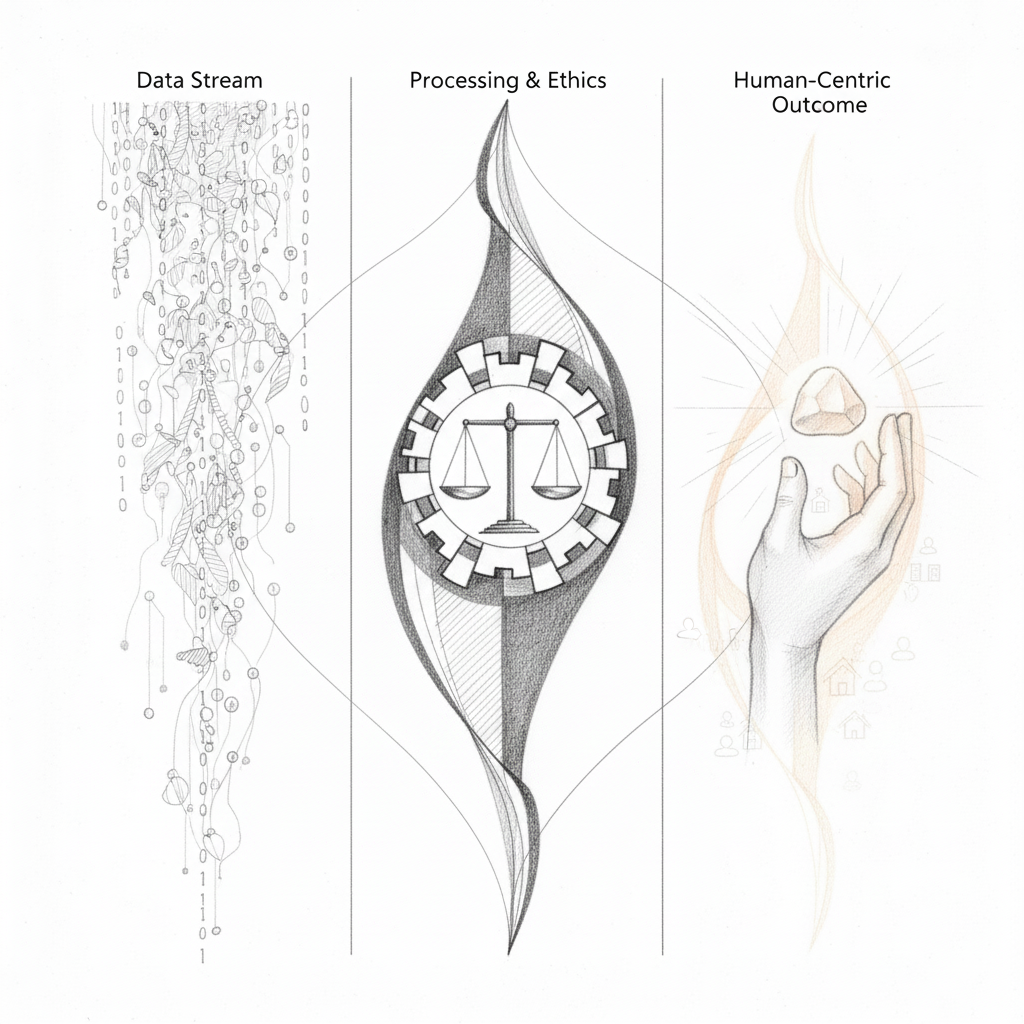
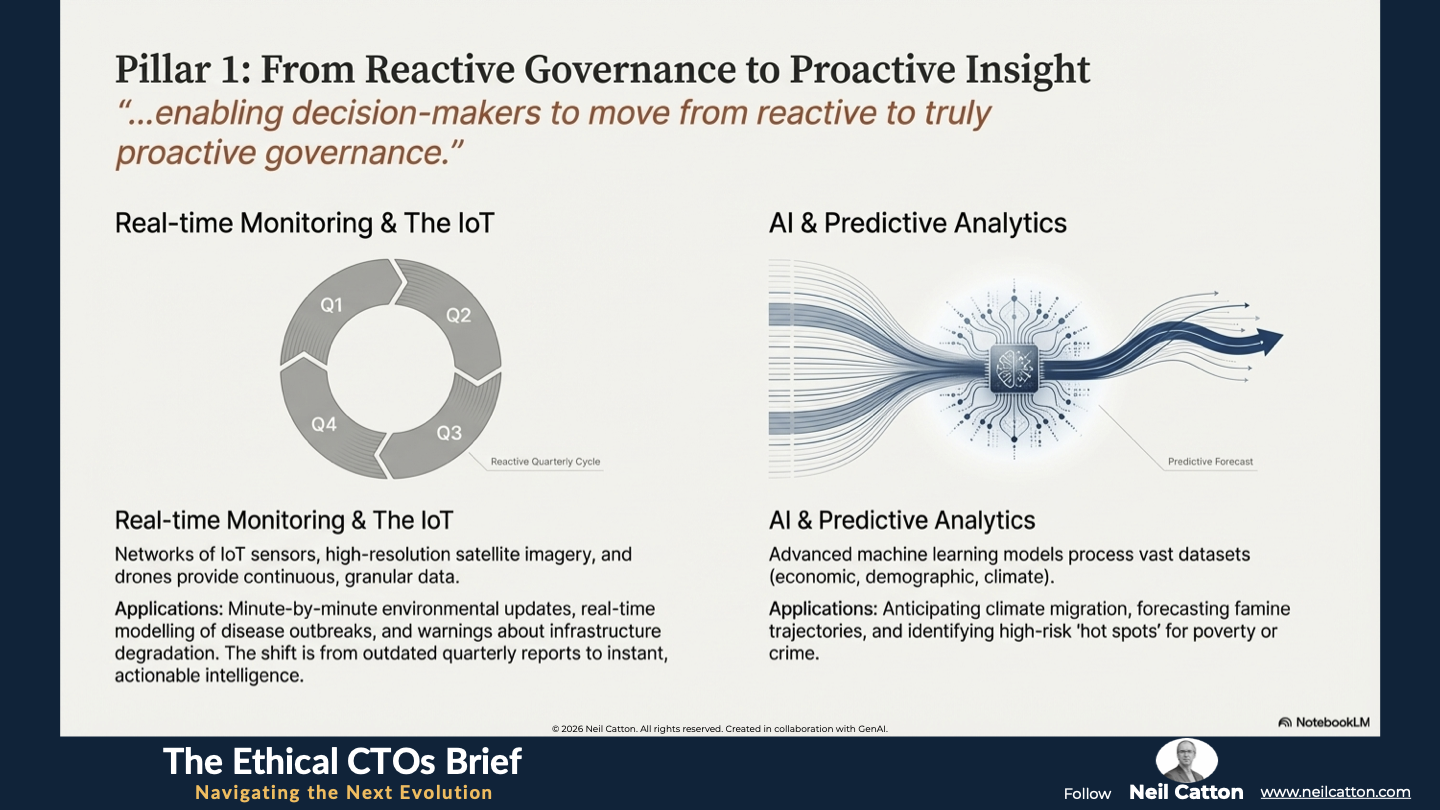
Modern technology offers unprecedented insight into the world’s most pressing problems enabling decision-makers to move from reactive to truly proactive governance. This is achieved through the convergence of vast data streams and sophisticated analytical processing.
- Real-time Monitoring and the IoT: Extensive networks of IoT sensors, high-resolution satellite imagery and sophisticated drone technology now provide continuous granular data across diverse areas. This includes minute-by-minute environmental updates, hyper-local agricultural productivity indices, and warnings about critical infrastructure degradation. It even allows for real-time modelling of disease outbreak spread. This data convergence empowers governments and NGOs to swiftly target and intervene hyper-locally, significantly improving response times in areas like disaster relief and environmental protection. The shift is from outdated quarterly reports to instant actionable intelligence.
- AI and Predictive Analytics: Advanced machine learning (ML) models excel at processing vast, intricate and fast-moving datasets. These include granular economic indicators, demographic shifts, and complex climate models. This predictive power is being harnessed to anticipate localised climate migration impacts, model future pandemic or famine trajectories, forecast resource needs like water and electricity, and identify high-risk ‘hot spots’ for poverty malnutrition and crime. By foreseeing potential crises governments can take pre-emptive action smarter capital is deployed and policies are designed before irreversible damage occurs.
Efficiency and Resource Optimisation: Doing More with Less
In a world with limited resources, technology is essential for addressing endemic waste, scarcity and inefficient resource use particularly in key areas of sustainability and human development.
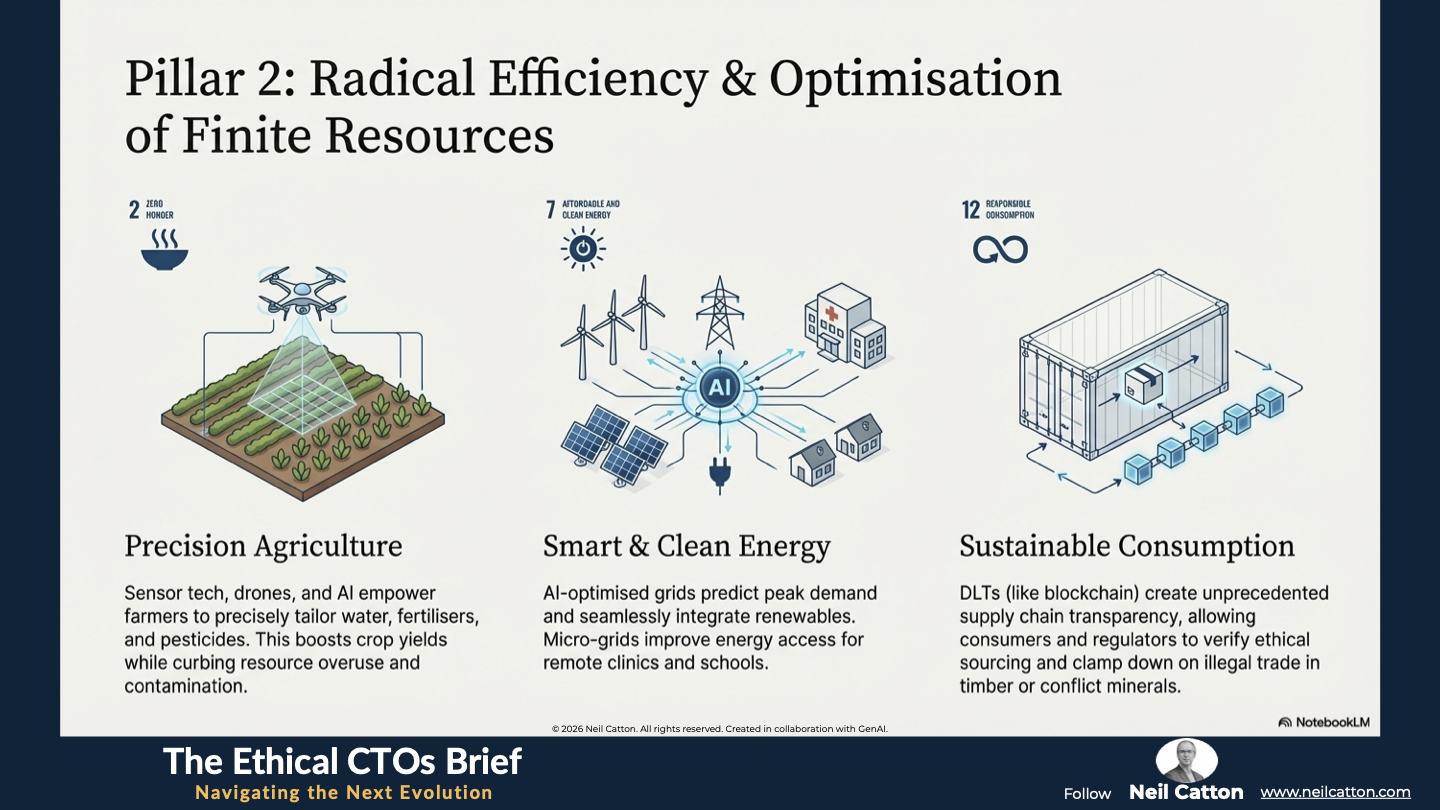
- Precision Agriculture (SDG 2: Zero Hunger): Advanced sensor technology, drones for field mapping and AI-driven analytics empower farmers to precisely tailor inputs like water, fertilisers, and pesticides to the micro-needs of individual plant sections or specific soil types. This significantly boosts crop yields, enhancing food production reliability while simultaneously curbing the overuse of precious, finite resources and minimising environmental contamination from agricultural runoff. Ultimately, this revolutionises farming by shifting from broad application to bespoke biological management.
- Smart and Clean Energy (SDG 7: Affordable and Clean Energy): The digitalisation of energy infrastructure through AI-optimised national grids, sophisticated smart metres and decentralised energy management systems significantly boosts energy efficiency and minimises transmission losses. These systems achieve this by accurately predicting peak demand using machine learning and seamlessly integrating intermittent renewable sources like solar and wind farms into the main network. This accelerates the shift away from polluting fossil fuels. Additionally, micro-grid technologies improve energy access stability for remote and off-grid communities, ensuring reliable clean power for clinics and schools.
- Sustainable Consumption via DLT (SDG 12: Responsible Consumption): Distributed Ledger Technologies (DLTs), like blockchain, are revolutionising supply chain transparency. This unprecedented digital traceability spans from the farm factory or mine to the final sale. Consumers, businesses, and regulators can accurately track goods verifying ethical sourcing and sustainable production. It also clamped down on illegal unsustainable trade in materials like timber and conflict minerals. By making the supply chain visible, it embeds accountability into consumption.
The Green Imperative: Technology for Planet-Focused SDGs
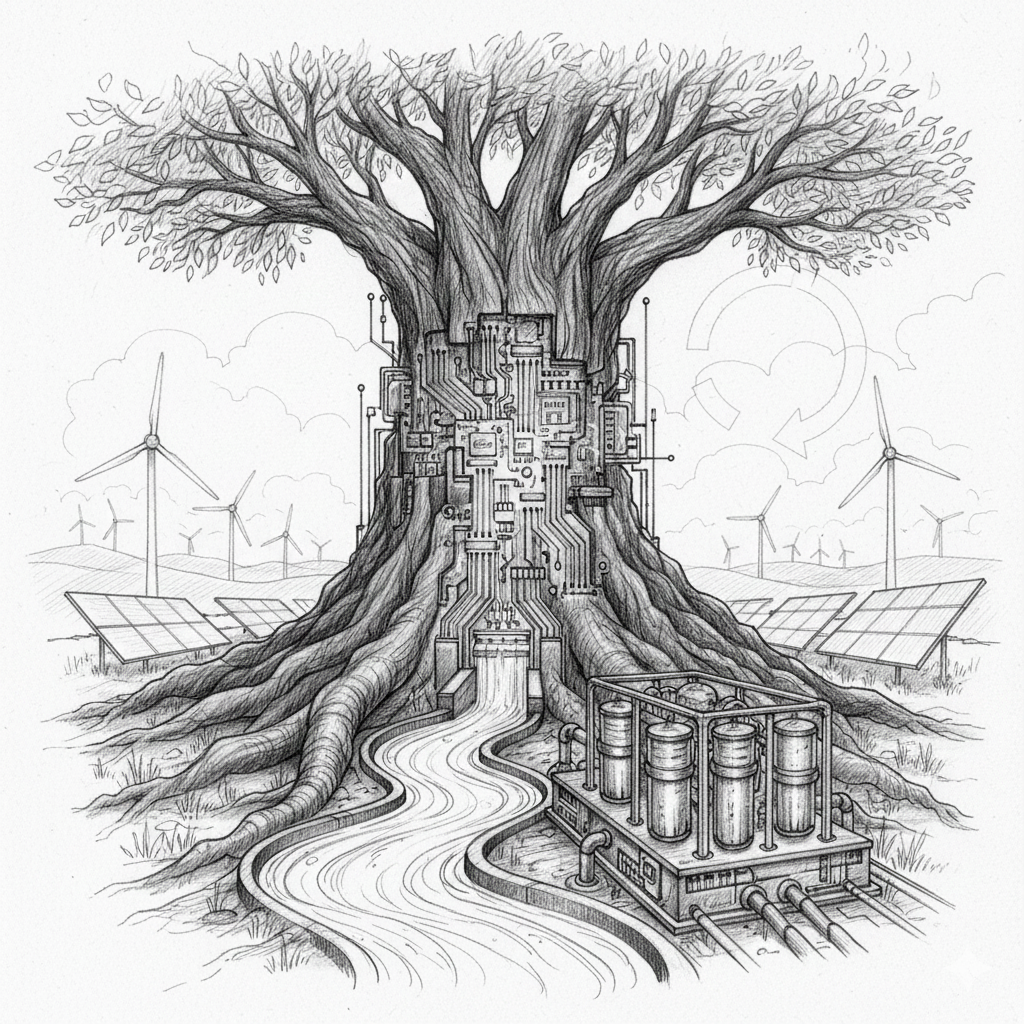
To effectively measure, mitigate and adapt to rapidly accelerating planetary changes, sophisticated digital tools are essential for achieving the environmental goals, particularly those related to climate action water security and life on land and beneath the water. Their integration is a necessity for planetary survival and stability.
Climate Action and Resilience (SDG 13)
The scale and complexity of the climate crisis demand computational power and simulation capabilities that go far beyond traditional methods of assessment.
- Advanced Climate Modelling: High-performance computing and increasingly exploratory quantum computing are powering incredibly complex high-resolution climate simulations. These models integrate vast amounts of atmospheric, oceanic, and geological data enabling policymakers to accurately assess the real-world impact of various mitigation strategies like carbon pricing and radical renewable energy targets with unprecedented foresight. This is vital for directing substantial public and private investment towards scientifically effective interventions.
- Adaptive Infrastructure using Digital Twins: Digital Twin technology generates detailed virtual replicas of physical assets, large infrastructure projects, and even entire cities. This enables city planners and engineers to “stress-test” designs against future climate change scenarios like rising sea levels, more frequent extreme heatwaves, and flash flooding before construction begins. This proactive approach ensures new infrastructure is inherently resilient energy-efficient and sustainable saving billions in future adaptation costs.
Water Security and Conservation (SDG 6)
Managing the planet’s most vital, yet increasingly scarce, resource is a critical technological challenge, requiring innovative ways to monitor quality, distribution, and usage.
- Leakage and Quality Monitoring Networks: Deploying sophisticated IoT sensor networks within municipal water systems allows for continuous, real-time monitoring of pipeline pressure, flow issues, and chemical composition. This ability drastically reduces water waste caused by undetected leaks in aging infrastructure and provides immediate alerts if water quality standards drop below safety thresholds, ensuring rapid public health protection. Furthermore, data can be used to meter and enforce sustainable water consumption limits in drought-prone areas.
- Optimising Purification Processes: AI is being used to dynamically optimise the chemical input and energy consumption of both municipal water purification and sewage treatment plants. By adjusting operational parameters in real-time based on incoming water quality and volume, these systems not only run more cost-effectively but also significantly reduce their overall environmental footprint whilst improving the consistency and safety of the final output.
- Material Tracking and E-Waste Management: Digital tracking systems, often underpinned by DLTs for immutable records, can register the exact material composition, repair history, and lifecycle of durable goods and packaging. This enhanced transparency vastly improves the efficiency of the recovery and sorting process for recyclers, who can instantly identify valuable or hazardous materials. Crucially, the immense challenge of electronic waste (e-waste) is being tackled through AI-powered sorting robots that can efficiently disassemble and separate complex components (such as circuit boards and batteries), driving significantly higher recycling rates for valuable rare earth minerals and mitigating environmental contamination.
The Circular Economy and Waste Reduction (SDG 12)
Moving away from the linear 'take-make-dispose' model of resource consumption is non-negotiable for true long-term sustainability. Technology is the fundamental enabler for this necessary structural shift.
- Material Tracking and E-Waste Management: Digital tracking systems, often underpinned by DLTs for immutable records, can register the exact material composition, repair history, and lifecycle of durable goods and packaging. This enhanced transparency vastly improves the efficiency of the recovery and sorting process for recyclers, who can instantly identify valuable or hazardous materials. Crucially, the immense challenge of electronic waste (e-waste) is being tackled through AI-powered sorting robots that can efficiently disassemble and separate complex components (such as circuit boards and batteries), driving significantly higher recycling rates for valuable rare earth minerals and mitigating environmental contamination.

The Equity Challenge: Bridging the Digital Divide and Mitigating Risk
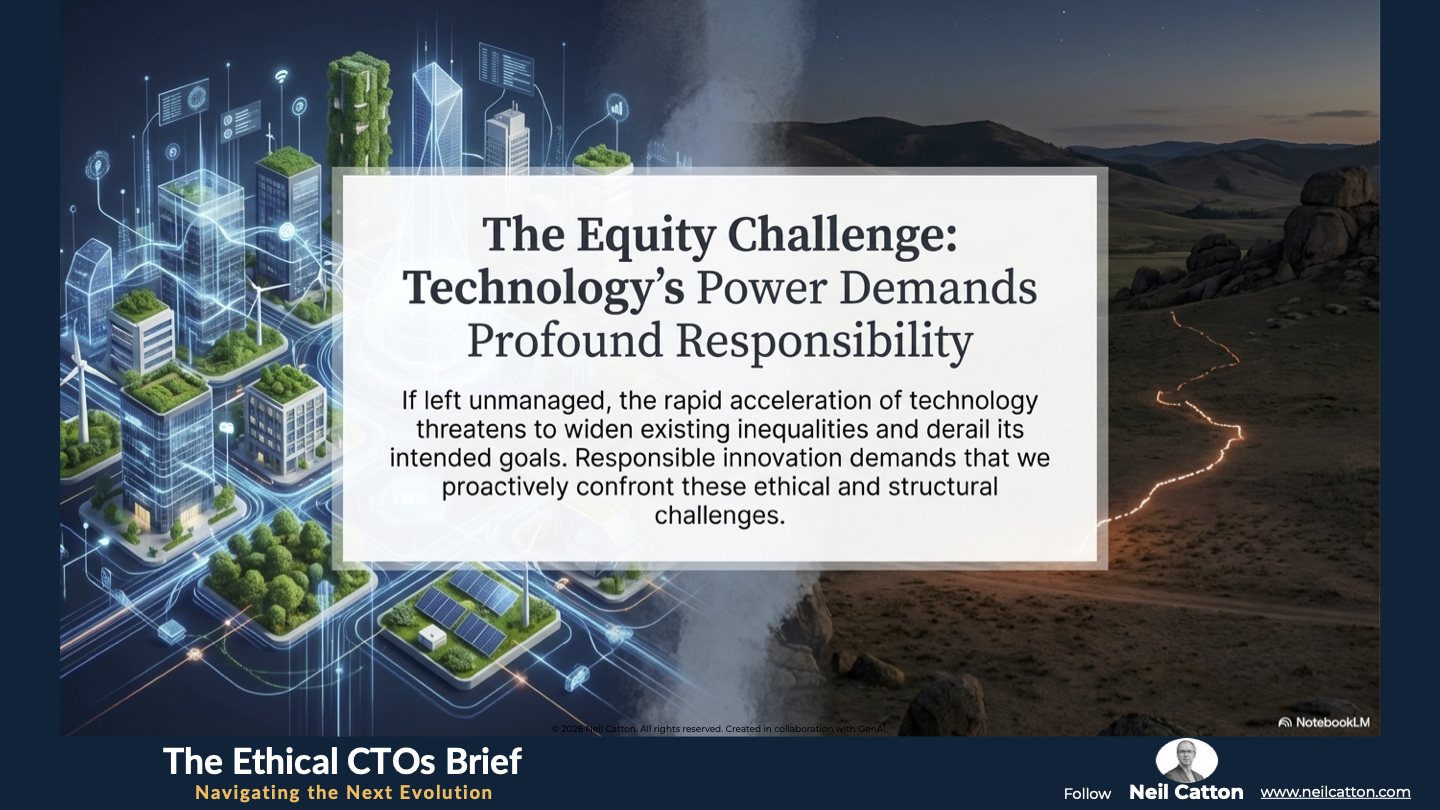
Technology, a force for global good, also accelerates at a pace that introduces significant risks. If left unmanaged these risks threaten to widen existing inequalities and derail its intended goals. Responsible innovation demands proactive tackling of these ethical and structural challenges.
The Deepening Digital Divide
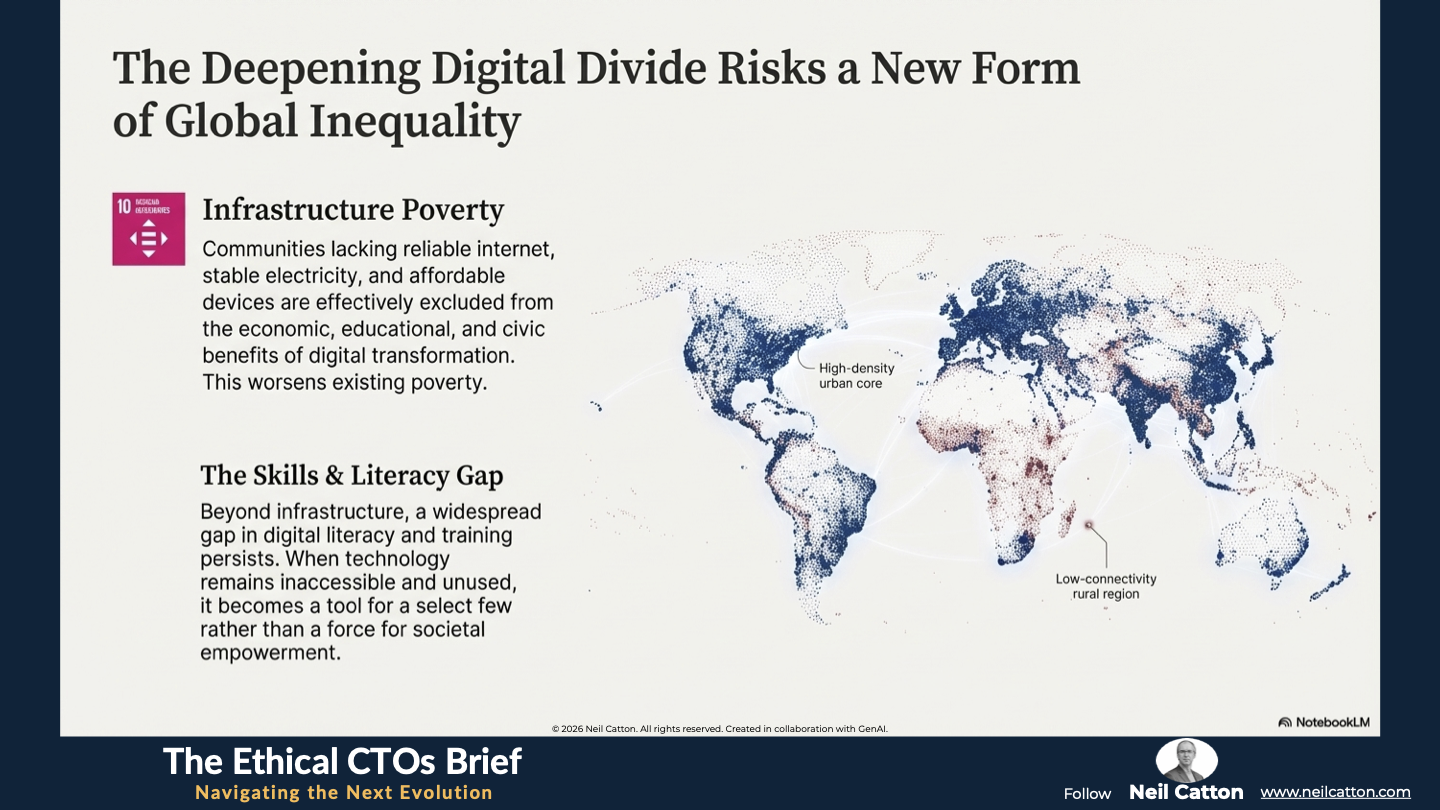
Advanced technology benefits are often concentrated in wealthy nations and densely populated urban areas. This creates a new pervasive global inequality that contradicts the Sustainable Development Goals mission.
- Infrastructure Poverty (SDG 10: Reduced Inequalities): Communities without basic reliable internet access whether broadband or mobile, stable and affordable electricity, and affordable digital devices are effectively excluded from the economic, educational, and civic benefits of digital transformation. This fundamental lack of access worsens existing socio-economic poverty and deepens the divide between those who are digitally empowered and those who are isolated. This results in missed opportunities for growth and resilience.
- The Skills and Literacy Gap: Beyond the technical hurdles, a widespread digital literacy and training gap persists. Even where the infrastructure exists, citizens often lack the essential confidence, language skills, and training to safely and effectively use new digital tools for personal and economic benefit. When technology remains inaccessible and unused by the majority, it becomes a tool for a select few rather than a true force for societal empowerment, further entrenching existing social inequalities.
Ethical and Governance Concerns
The immense power of data-driven systems raises profound moral and structural questions that require urgent, coordinated attention before widespread deployment.
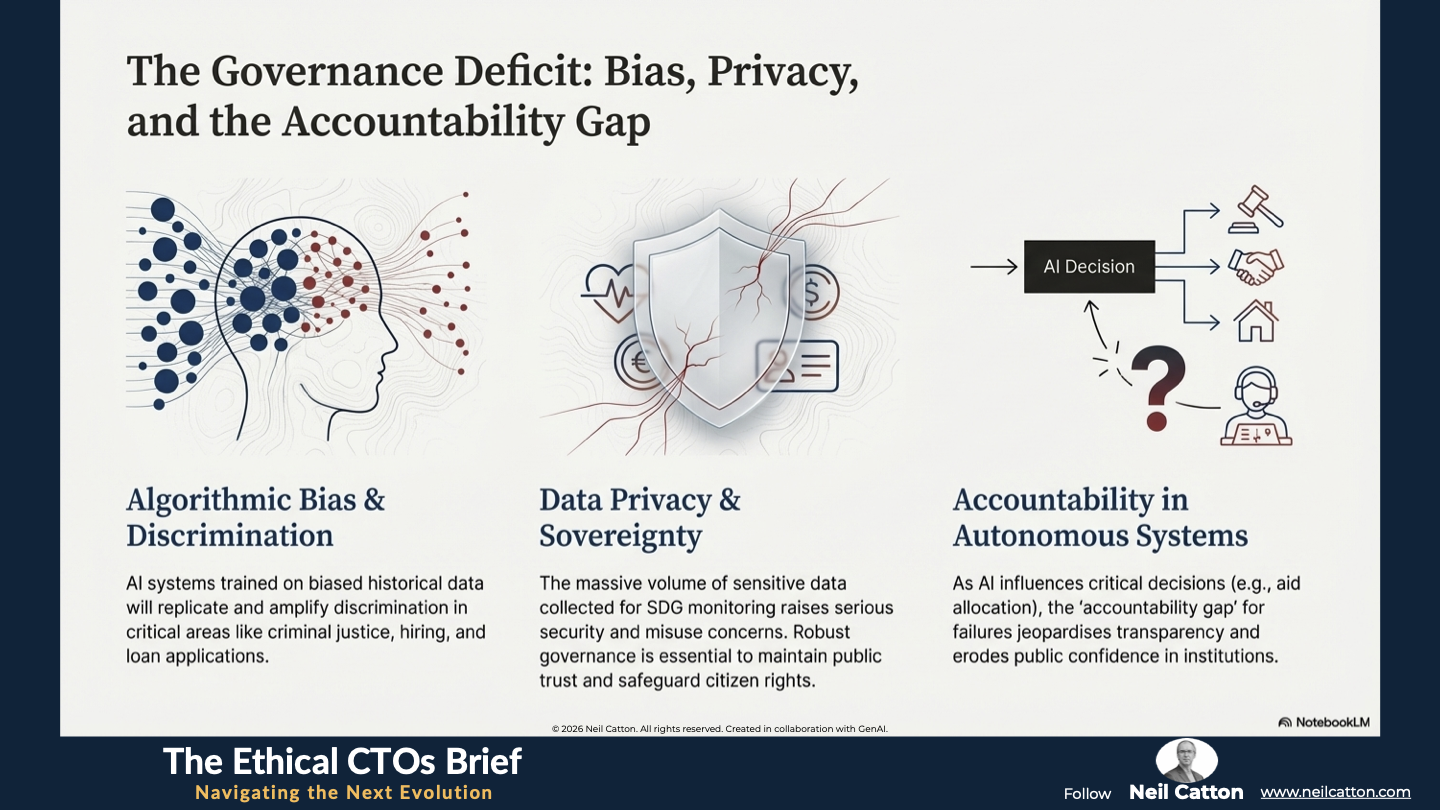
- Algorithmic Bias and Discrimination: AI and ML systems are inherently limited by the data they’re trained on. If historical data reflects existing societal biases like gender, race or economic status, the resulting algorithms will not only replicate these biases but potentially perpetuate or even amplify discrimination in automated decisions. This can lead to systematically unfair or inequitable outcomes in crucial public services such as criminal justice sentencing, hiring, and loan applications and access to essential public finance.
- Data Privacy, Sovereignty, and Surveillance: The unprecedented volume of sensitive data collected for Sustainable Development Goal monitoring – including confidential health records, detailed location histories and personal financial information – raises serious security, data sovereignty and misuse concerns. This applies to both state and non-state actors. Robust governance is crucial, especially in fragile institutions or those vulnerable to foreign data extraction, to maintain public trust and safeguard citizen rights. Transparency and legal definition of data ownership and usage are essential.
- Accountability in Autonomous Systems: As AI and autonomous systems increasingly influence critical decision-making areas like aid allocation, public transport management and medical supply distribution, assigning clear legal and operational responsibility for technical failures or unintended negative consequences becomes a significant challenge. This “accountability gap” jeopardises transparency, hinders effective democratic oversight and fundamentally erodes public confidence in institutions leading the Sustainable Development Goals agenda.

The Path to Next Evolution: Best Practices and Governance
To ensure technology effectively drives the Sustainable Development Goals, a coordinated global strategy is essential. This strategy should prioritise equity, ethical governance and deep systems thinking. We must earn from past technological disruptions and develop frameworks that anticipate future challenges.
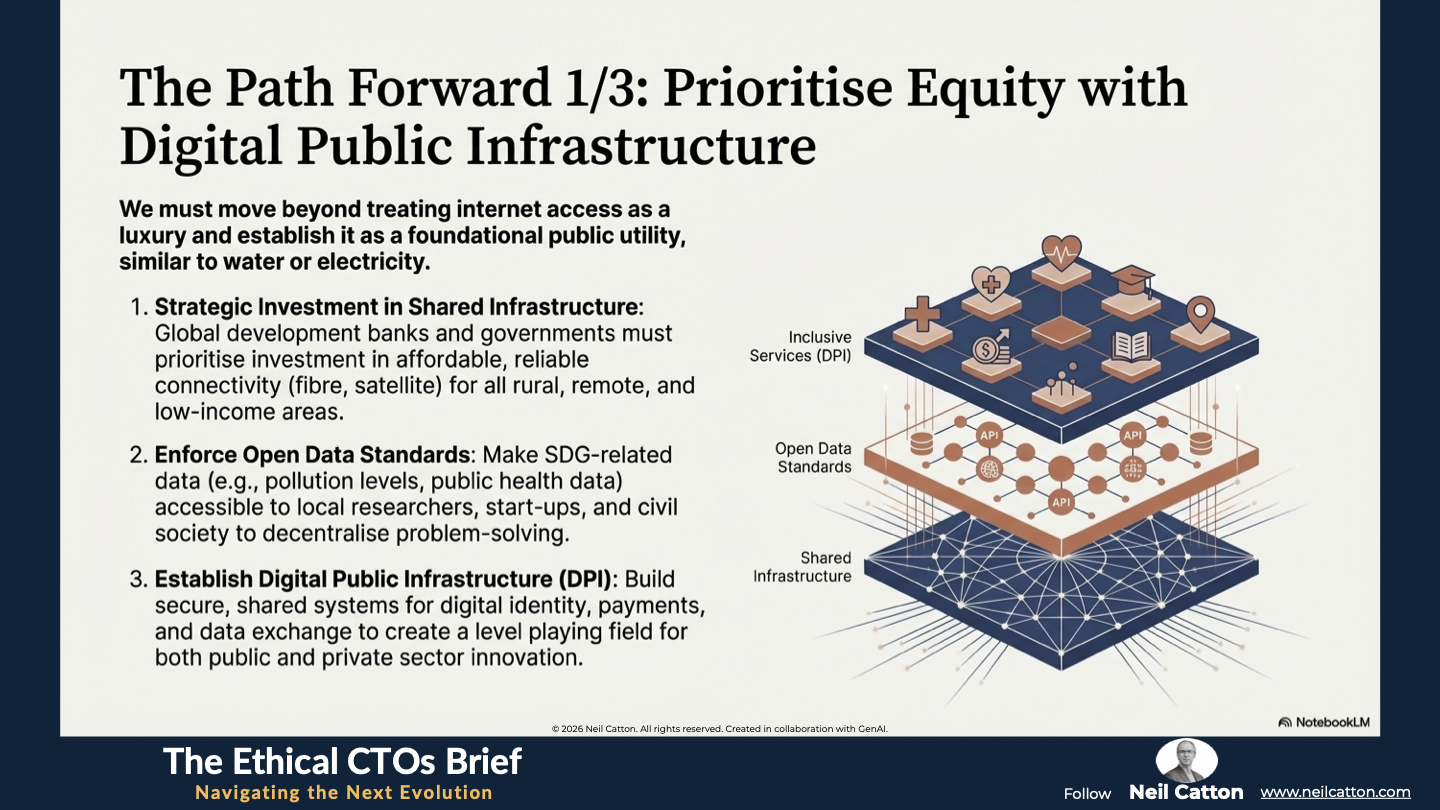
Prioritising Equity and Digital Public Infrastructure (DPI)
We must move beyond treating internet access as a luxury good and firmly establish it as a foundational public utility, similar to water or electricity, upon which human development depends.
- Strategic Investment in Shared Infrastructure: Global development banks and national governments must proactively prioritise strategic investment in extending affordable reliable digital infrastructure like fibre, fixed wireless, and satellite connectivity to all rural remote and low-income areas. This investment should be complemented by carefully designed subsidies and partnerships to reduce the overall cost of digital access and ensure devices are affordable for everyone.
- Open Data Standards for Collaboration: Promoting and enforcing open data protocols, especially for all SDG-related metrics like pollution levels, school attendance and public health data, makes valuable information easily accessible to local researchers, innovative start-ups, civil society groups and citizens. This crucial policy action decentralises problem-solving, fosters competitive local innovation, and encourages wider public participation in achieving the goals.
- Digital Public Infrastructure (DPI): Establishing robust DPI – core, secure shared systems for digital identity, seamless payments and data exchange consent – creates a universal, cost-effective and safe platform. By building these foundational digital layers, countries can more quickly and securely develop inclusive public services for health finance and education. This fosters a vital level playing field for both public and private sector innovation.
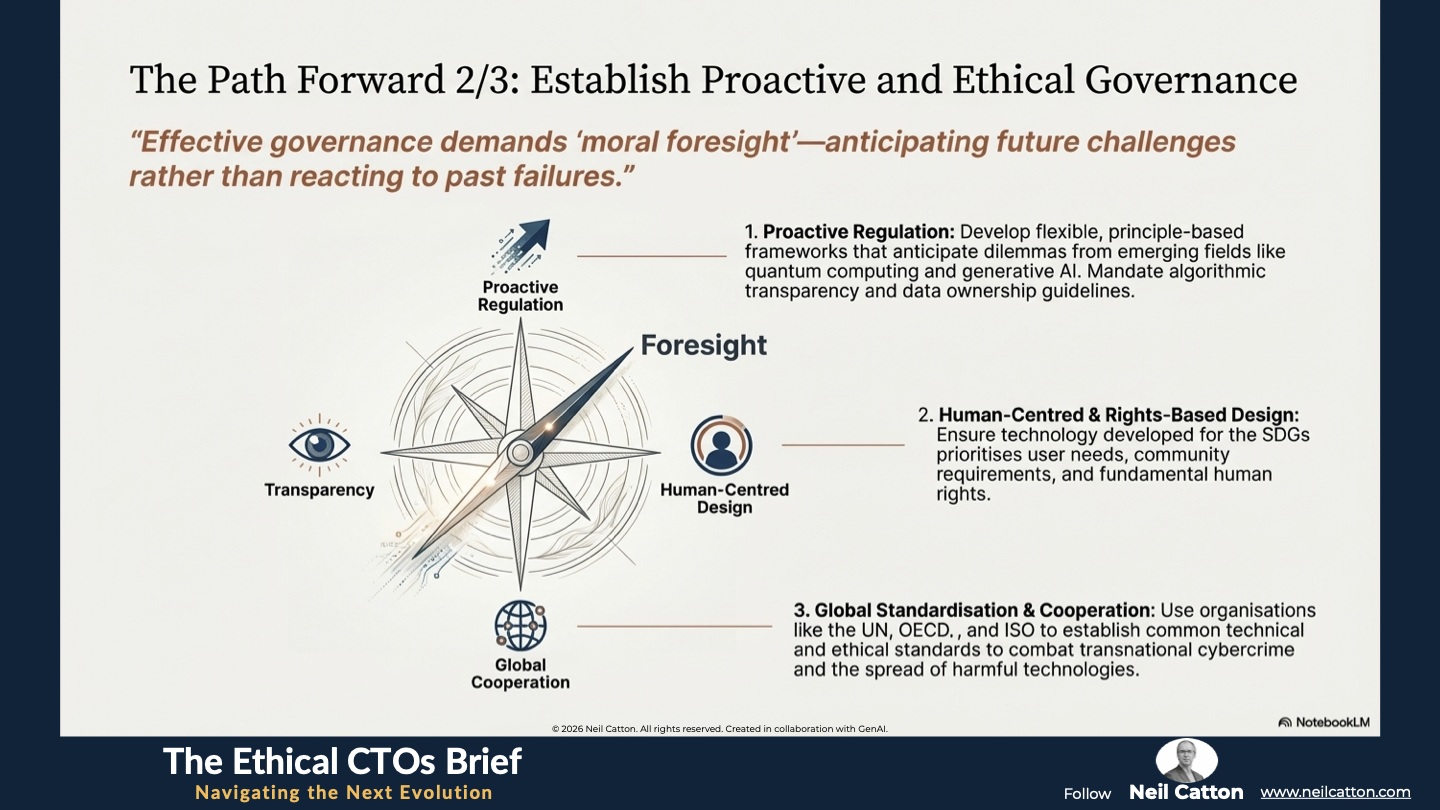
Establishing Proactive Ethical Frameworks
Effective governance demands a forward-thinking approach, anticipating future technological advancements rather than simply reacting to past failures or ethical lapses. This necessitates “moral foresight”.
- Moral Foresight and Proactive Regulation: Governance frameworks must be flexible, principle-based and forward-looking. They should anticipate the complex ethical and security dilemmas posed by emerging fields like quantum computing, advanced deepfakes, and sophisticated generative AI. This demands clear internationally harmonised guidelines on data ownership, cyber resilience standards, and mandatory algorithmic transparency. These guidelines must be consistently applied nationally and across geopolitical borders to foster trust and predictability.
- Human-Centred and Rights-Based Design: Technology developed for the Sustainable Development Goals must prioritise user needs, specific community requirements and fundamental human rights. Systems should be intelligible, easy to control and accountable, empowering local communities and service providers rather than simply extracting data or imposing solutions. Feedback loops must be integral to the design process.
- Global Standardisation and Cooperation: Cyber threats, data exploitation, and technological risks transcend national borders. Therefore international cooperation, supported by organisations like the United Nations, OECD, and ISO, is essential. This cooperation helps establish common technical and ethical standards share best practices and build collective defences against transnational cybercrime and the spread of harmful technologies.
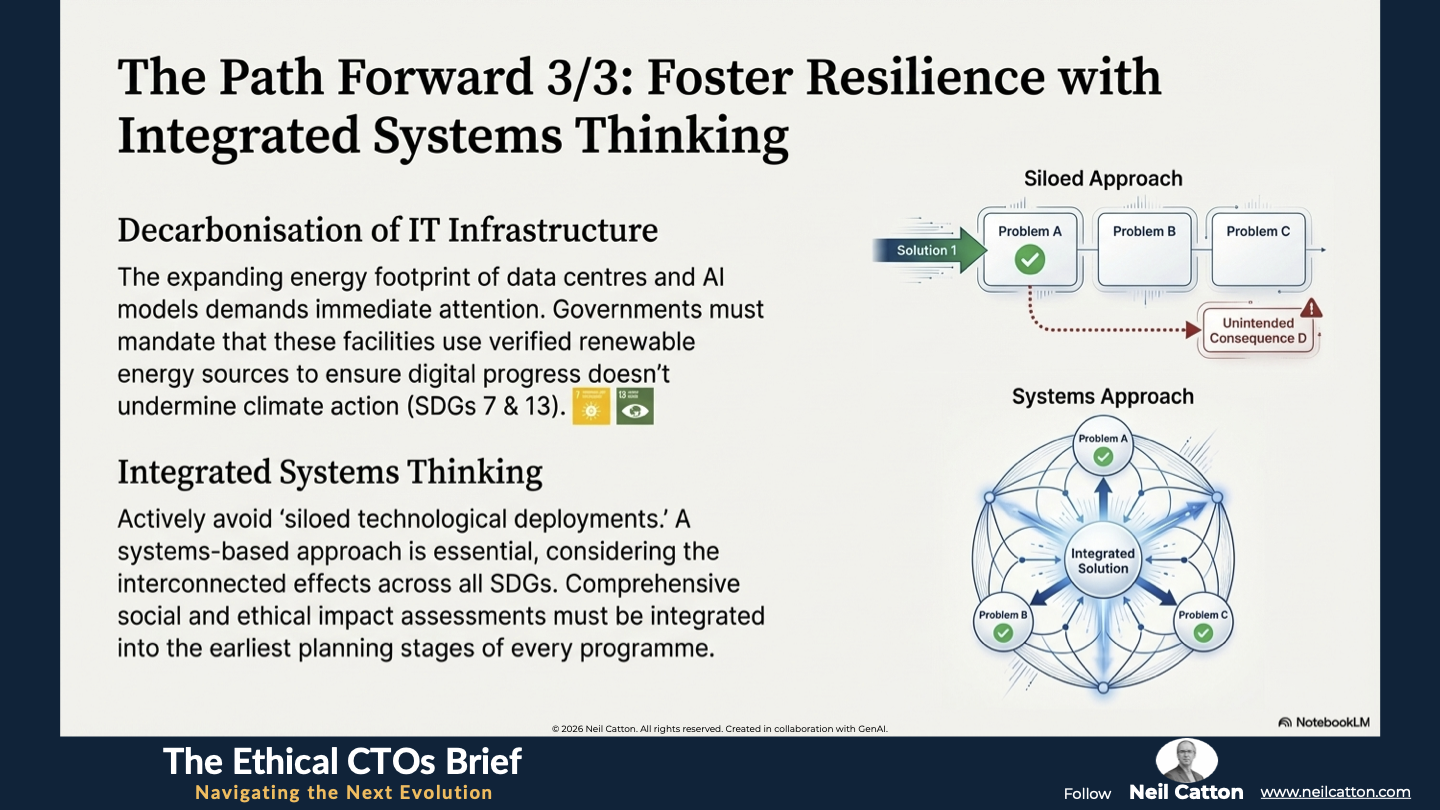
Fostering Resilience and Systems Thinking
For successful and sustainable technological deployment, a thorough understanding of its broader ecological, political, and societal impact is crucial. A holistic approach is essential to avoid unforeseen consequences.
- Decarbonisation of IT Infrastructure: The substantial and expanding energy footprint of large computationally intensive data centres and massive AI models demands immediate attention. Governments and international bodies must mandate that these facilities exclusively use verified renewable energy sources. This is crucial to ensure digital progress and the pursuit of Sustainable Development Goals (SDGs) don’t inadvertently undermine climate action (SDGs 7 and 13). Energy efficiency must be a fundamental design requirement for all large-scale digital deployments.
- Integrated Systems Thinking: When implementing new technology, a systems-based approach is essential. This involves carefully considering the interconnected effects across different Sustainable Development Goals and all social sectors. We must actively avoid “siloed technological deployments” like solving energy efficiency in one region only to worsen e-waste pollution elsewhere. Comprehensive social and ethical impact assessments should be integrated into the earliest planning stages of every programme and continuous monitoring and adaptive governance should follow throughout its life cycle.
A Final Word
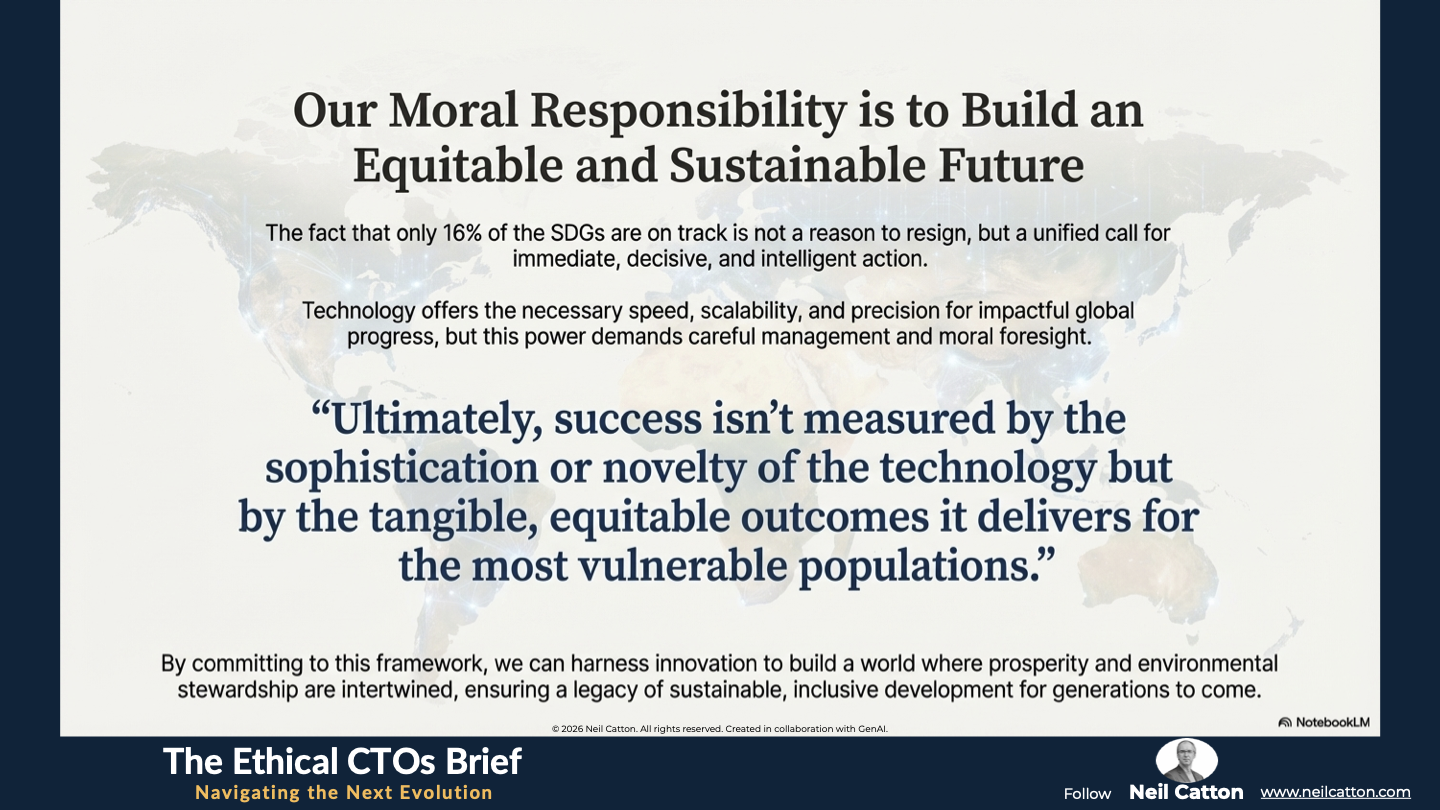
The UN Sustainable Development Goals represent a shared global mission of unprecedented complexity and urgency. It’s sobering that only a fraction are currently on track but this isn’t a reason to resign. Instead it’s a critical alarm – a unified call for immediate, decisive, and intelligent action. To meaningfully bridge this massive gap and realise the global ambition by 2030 we must intentionally and responsibly deploy modern scaled technology.
Technology offers the speed, scalability, precision and predictive power needed for verifiable and impactful global progress. However, this immense power demands careful management, moral foresight and an unwavering commitment to equity and inclusion. Ultimately, success isn’t measured by the sophistication or novelty of the technology but by the tangible, equitable outcomes it delivers for the most vulnerable populations who stand to gain most from the Sustainable Development Goals agenda.
By committing to responsible technology, use investing in inclusive digital public infrastructure, and adopting robust ethical governance we can transcend mere reaction to global challenges. We can decisively harness innovation to build a world where prosperity and environmental stewardship are intertwined, ensuring a legacy of sustainable inclusive development for generations to come. The opportunity and moral responsibility to accelerate the next evolution of global governance and deliver the 2030 agenda are ours to seize.
Key Takeaways: The Architecture of Global Equity
The Indivisibility Principle: Technology must mirror the UN SDGs; solving for clean water (SDG 6) inherently supports gender equality (SDG 5).
Seeing the Unseen: Using IoT and Satellite imagery for real-time monitoring of environmental degradation and hyper-local agricultural needs.
Radical Efficiency: Moving from broad application to "bespoke biological management" in agriculture and AI-optimized clean energy grids.
Structural Accountability: Leveraging Blockchain (DLT) for immutable supply chain transparency, ensuring ethical sourcing from mine to market.


1
2
3
4
5
6
7
8
9
10
11
12
13
14
15
Strategic Insights: Planet Focused Technology Architecture
Climate Resilience: Using Digital Twins to "stress-test" urban infrastructure against future sea-level rises and extreme heat before building.
The Circular Economy: AI-powered sorting robots and digital material tracking to tackle the global e-waste crisis and rare earth recovery.
Decarbonizing IT: A mandate for data centers to use 100% renewable energy, ensuring digital progress doesn't undermine climate action.
Predictive Kinematics: Shifting from reactive quarterly reports to sensing directional momentum in disaster relief and public health.
Video Summary: Technology as a Public Utility
Beyond the Digital Divide: Establishing internet access and DPI (Digital Public Infrastructure) as foundational human rights, not luxury goods.
Moral Foresight: Proactively regulating emerging fields like Quantum and Generative AI to prevent the widening of global inequality.
Integrated Systems Thinking: Avoiding "siloed deployments" that solve one problem (energy) while creating another (e-waste).
The Human-Centric Loop: Ensuring technology developed for SDGs empowers local communities rather than just extracting their data.
The Ethical CTO: Arc 1 Index
- Transformation: Digital Transformation
- Diagnosis: The Legacy Trap
- Efficiency: The Productivity Paradox
- Velocity: The Time-Zero Organisation
- Governance: Strategy of Designed Chaos
- Orchestration: Executive Coherence
- Impact: The Digital Catalyst