We are fighting 21st-century crime with 20th-century tools.
Policing in the UK has reached a breaking point. It’s not just about rising crime rates; it’s about a fundamental mismatch in speed. On one side, we have borderless, industrialised cybercrime syndicates that move with the agility of a Silicon Valley startup. On the other, we have a reactive policing model built on legacy systems, fragmented data, and bureaucratic layers that were never designed for a digital-first world.
In my latest article, Policing at an Inflection Point, I explore why "catching the bad guys" is no longer a sufficient strategy. We need to stop patching old systems and start redefining the entire relationship between law enforcement, technology, and the public.
Key themes explored in this piece:
The Asymmetry of Speed: Why "Institutional Latency" is the greatest weapon in a criminal's arsenal.
Moving Beyond the Reactive: Shifting from responding to incidents to building "Community Resilience" through predictive, ethical data use.
The Trust Gap: Why transparency and human-centric governance are the only ways to restore public confidence in an algorithmic age.
The goal isn't just to modernise the police force, it's to ensure that as our world becomes more complex, our commitment to justice remains human-centric and structurally sound.
Digital Transformation and Community Resilience
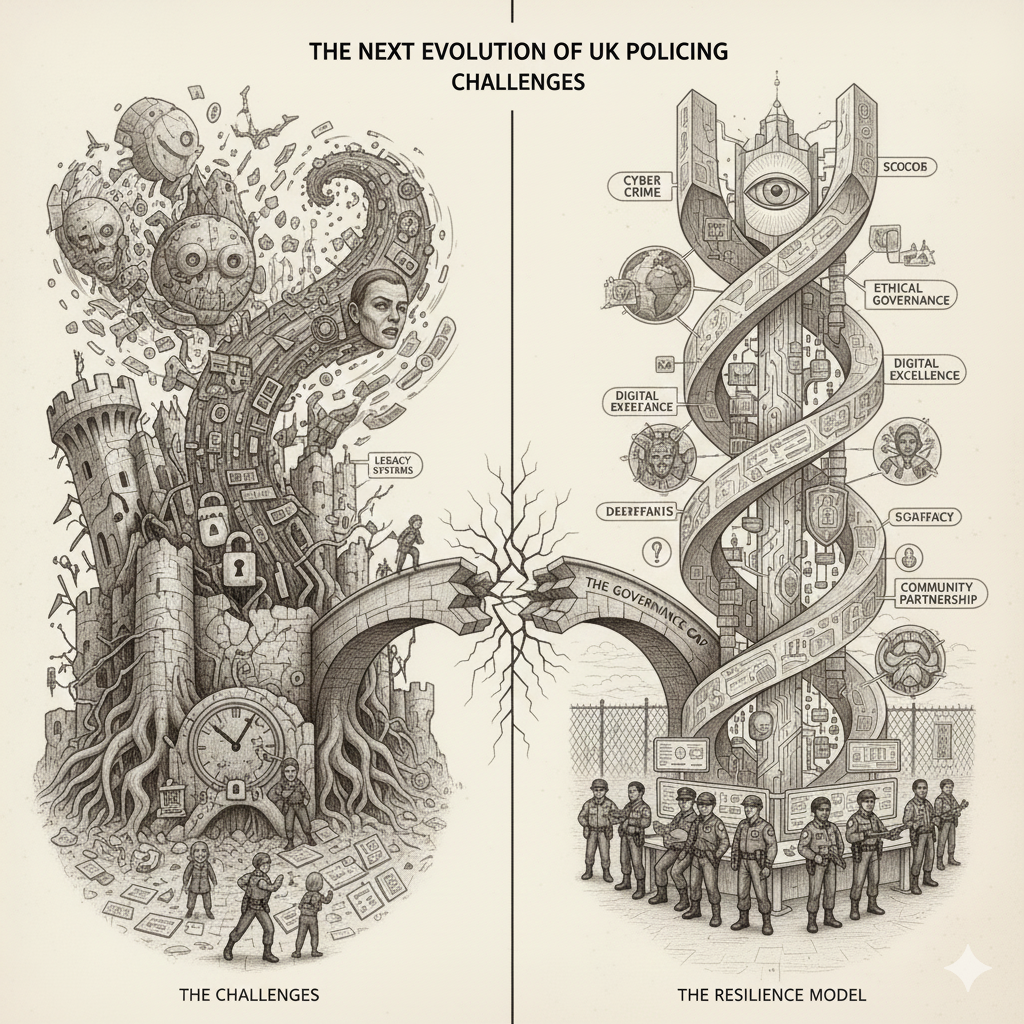
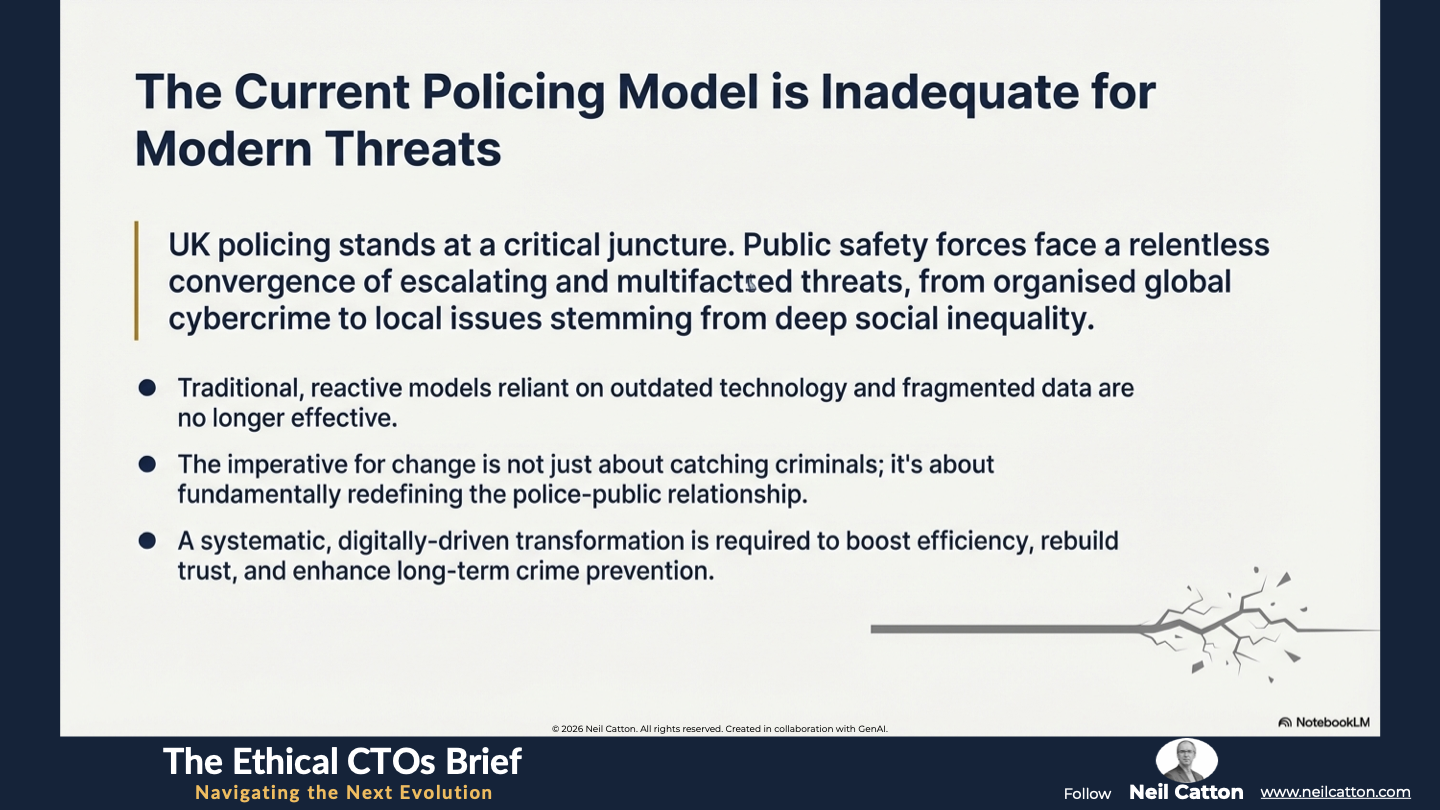
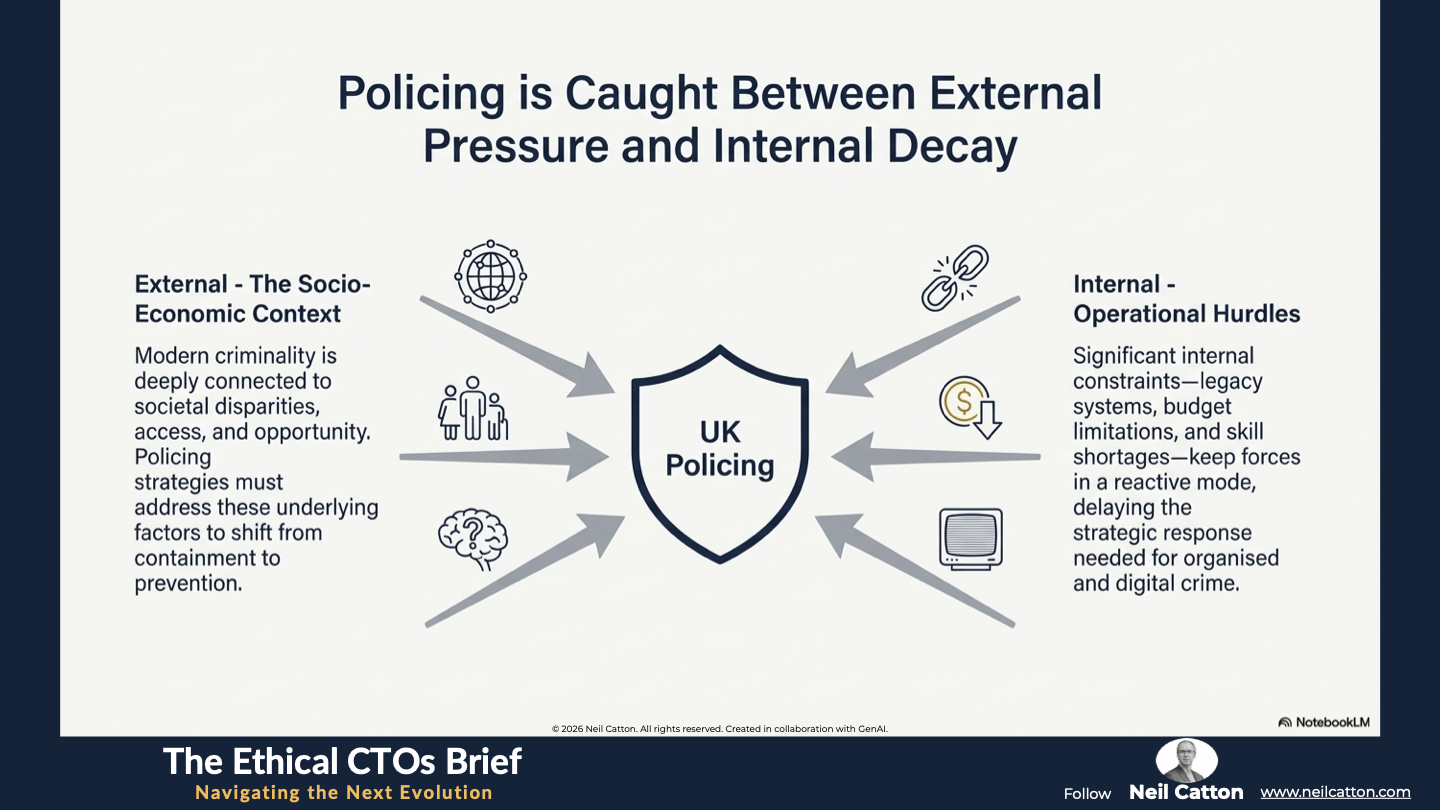
Policing in the UK stands at a critical juncture. Public safety forces face a relentless convergence of escalating and multifaceted threats. These range from highly organised global cybercrime networks to local issues stemming from deep social inequality. Traditional reactive policing models, often reliant on outdated technology and fragmented data systems, are simply inadequate to address the growing complexity and scale of these modern challenges effectively.
The imperative for change extends beyond simply catching criminals; it demands a fundamental redefinition of the police-public relationship. With increasing demands for greater transparency, accountability and ethical governance, UK law enforcement must adopt a systematic digitally-driven transformation. This article outlines a structural framework for this evolution, illustrating how strategically deploying advanced technologies alongside a renewed focus on community collaboration can boost operational efficiency, rebuild public trust, and significantly enhance long-term crime prevention.
The Socio-Economic Context: Drivers of Modern Criminality
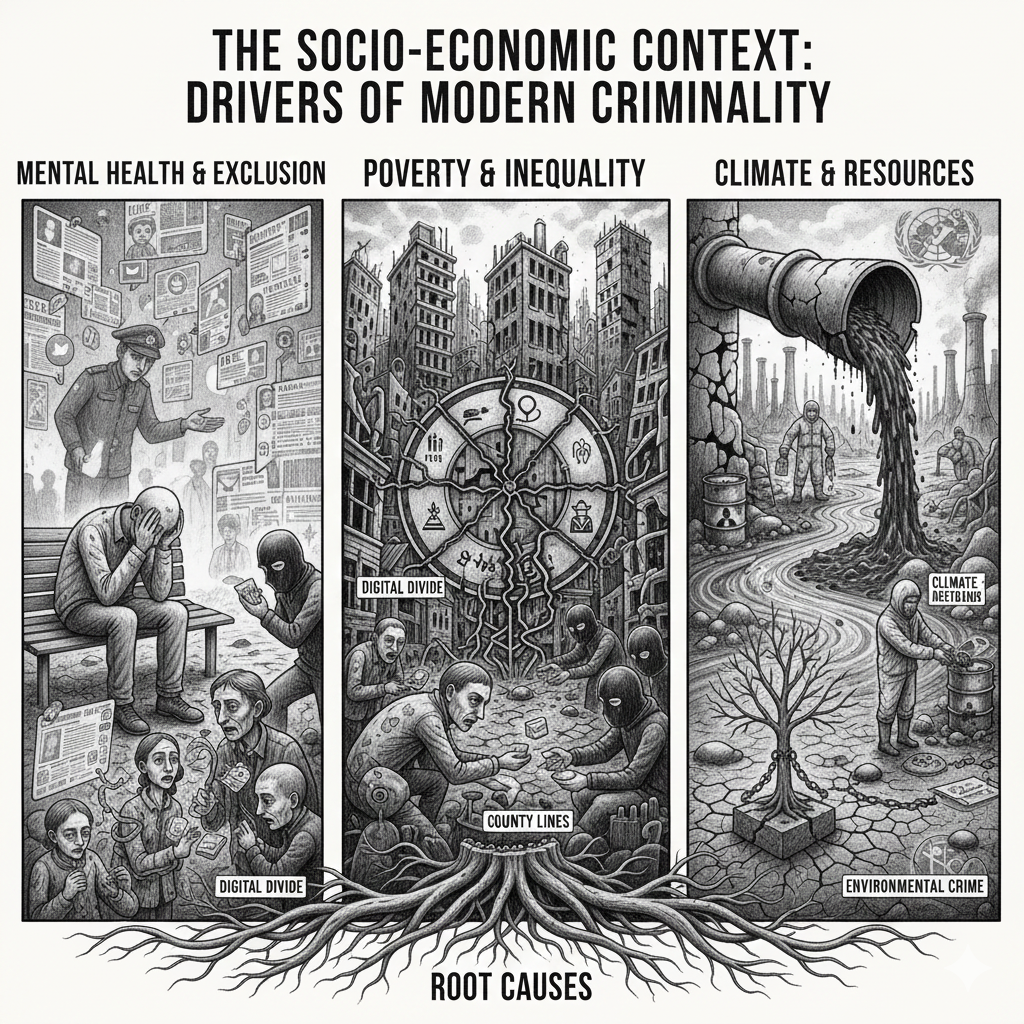
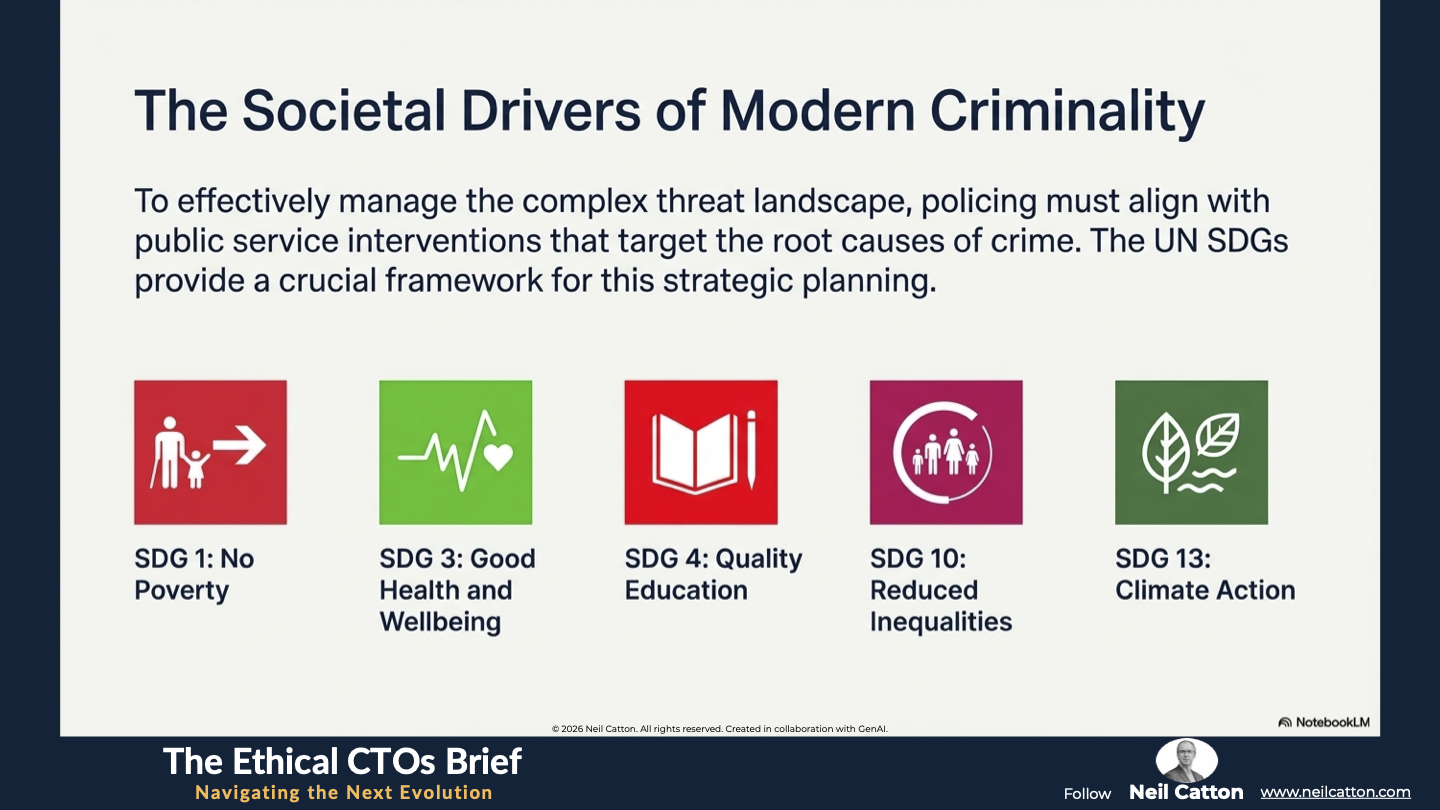
Modern policing goes beyond reactive enforcement; it requires a deep understanding and proactive engagement with the socio-economic context driving contemporary crime. To effectively manage the complex threat landscape, policing strategies must first address the underlying societal factors. Criminality isn’t isolated; it’s deeply connected to disparities, access and opportunity. By aligning law enforcement and public service interventions with key UN Sustainable Development Goals (SDGs), the UK can foster a more equitable and resilient society. This shift will move the focus from containment to systemic, long-term prevention. This section explores the core contextual challenges law enforcement must incorporate into its strategic planning.
The major contextual challenges include:
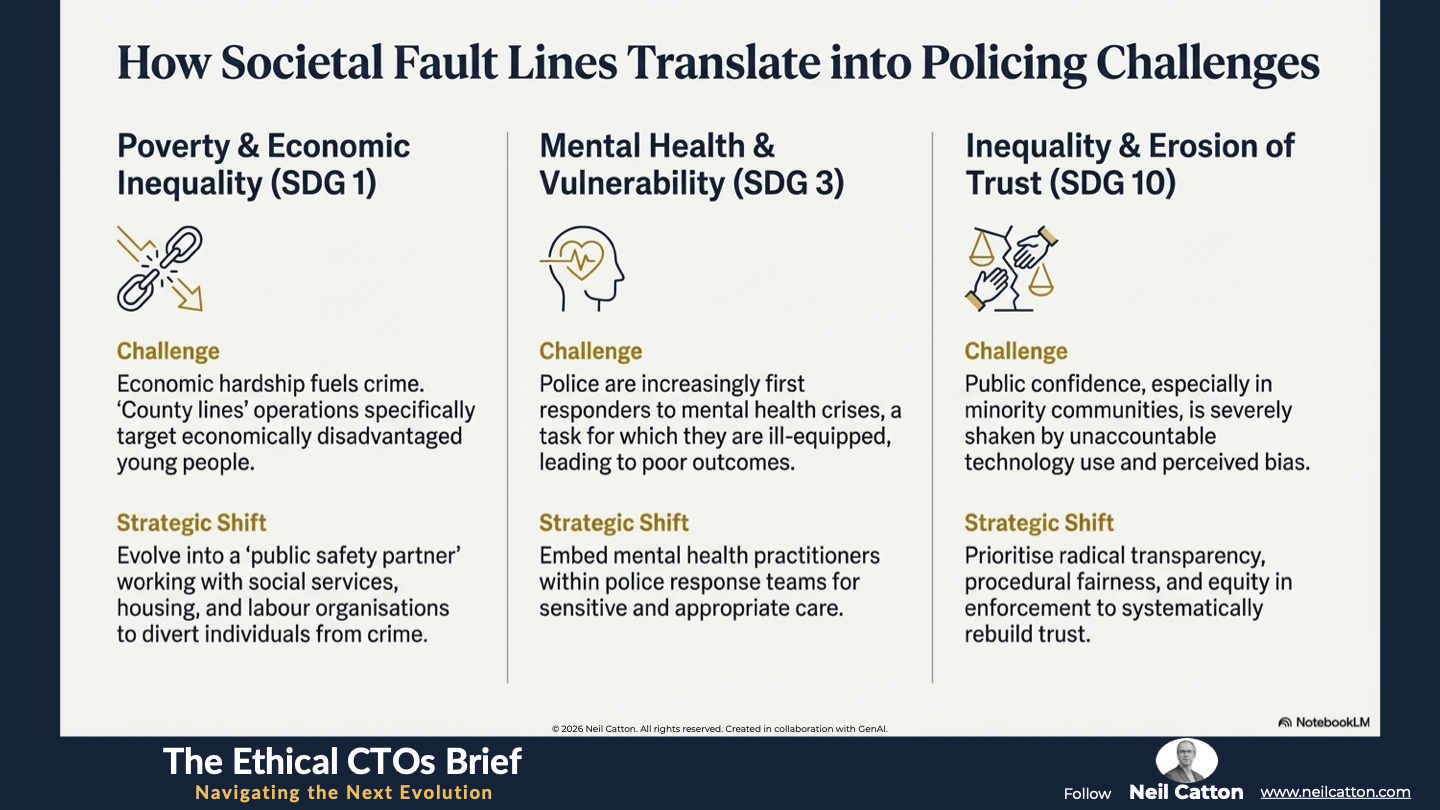
- Poverty and Deep Economic Inequality (SDG 1: No Poverty): Economic hardship and wealth inequality are proven to lead to higher crime rates. For instance, ‘county lines’ drug operations often target young, economically disadvantaged individuals. Future policing should evolve into a ‘public safety partner’ that works directly with social services, housing, and labour organisations. This involves providing genuine support and opportunities to divert individuals from criminal paths. This requires a systemic shift in resource allocation towards community outreach and early intervention programmes.
- Mental Health, Vulnerability, and Wellbeing (SDG 3: Good Health and Wellbeing): The police force is increasingly responding to mental health crises, but inadequate support systems mean officers spend too much time managing vulnerable people, often leading to poor outcomes. To improve outcomes, mental health practitioners should be embedded in police response teams to ensure sensitive and appropriate care, reducing the likelihood of repeat incidents and improving public interactions.
- Quality Education and Digital Skill Gaps (SDG 4: Quality Education): A lack of relevant skills and education limits job prospects, increasing the risk of low-level or organised crime. Rapid digitisation has created a dangerous ‘digital divide’, leaving digitally excluded citizens vulnerable to online fraud and exploitation. Police should engage in educational programmes to promote digital literacy and create pathways for acquiring the skills needed for productive law-abiding futures.
- Inequality and Erosion of Trust (SDG 10: Reduced Inequalities): Public confidence, especially in minority and underserved communities, has been severely shaken by high-profile incidents and the often-unaccountable use of technologies like facial recognition. Addressing perceived or real bias is crucial. Strategies should prioritise radical transparency, procedural fairness and equity in enforcement to systematically rebuild trust and strengthen community relationships.
- The Climate Nexus and Environmental Crime (SDG 13: Climate Action): A significant yet often overlooked challenge is the growing link between environmental degradation and organised crime. This includes illegal waste dumping, waste-site arson and wildlife trafficking. UK policing must adapt its investigative focus and expertise to address these emerging threats, which have substantial economic and public health implications.
Operational Hurdles in Contemporary Policing
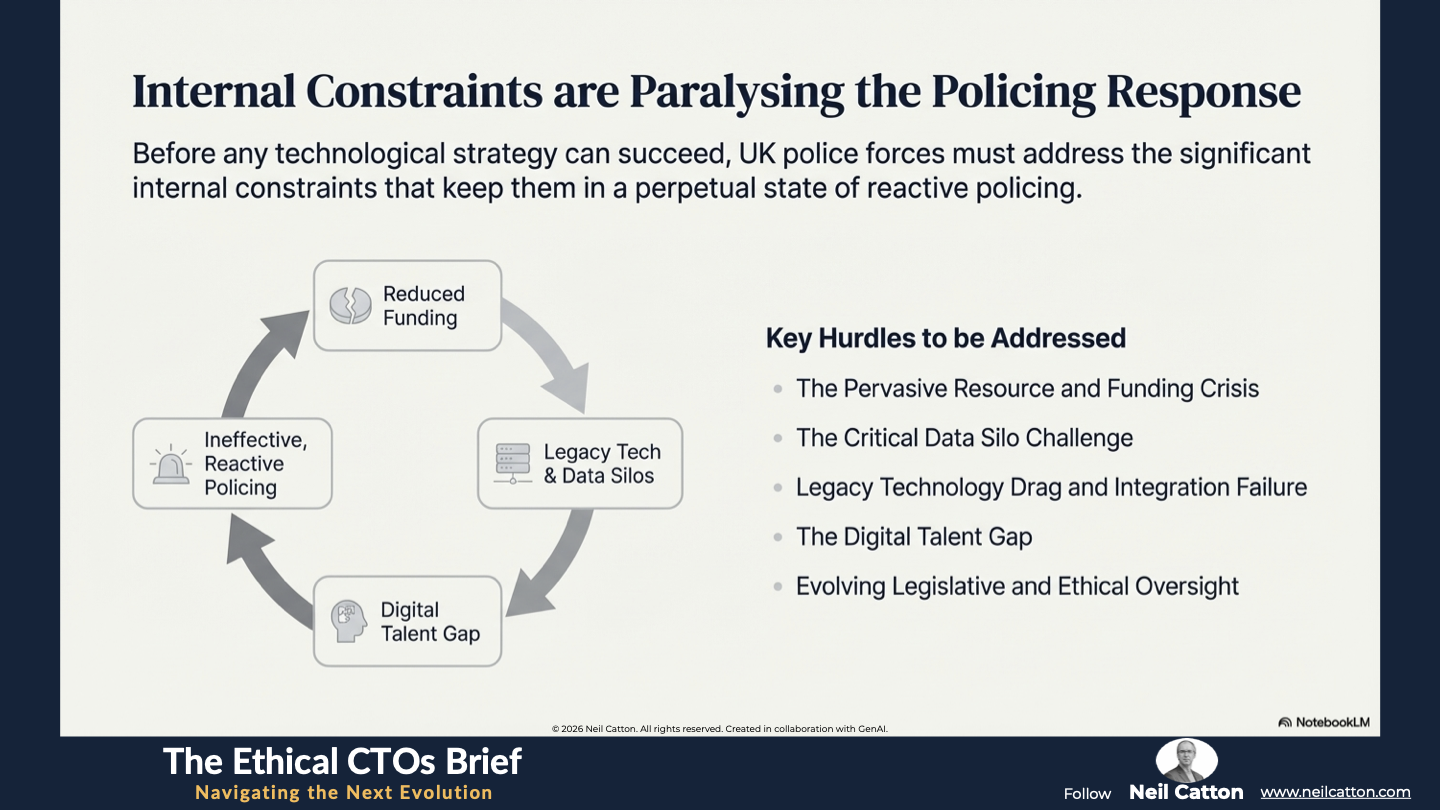
While societal factors drive crime, UK police forces face significant internal constraints including legacy IT systems, budget limitations and a digital skills shortage. Operating under pressure, forces struggle to respond effectively and transform. These challenges keep policing reactive, delaying a strategic overview needed to tackle organised and digital crime. The following must be addressed before any technological strategy can succeed.
- The Pervasive Resource and Funding Crisis: Years of reduced government funding have severely strained capacity across all territorial police forces. This has directly impacted their ability to invest in modern technology, recruit and retain specialist talent, and maintain basic front-line visibility. Consequently, officers are forced into a perpetual reactive policing mode struggling to keep pace with the ever-changing nature of modern crime.
- The Critical Data Silo Challenge: Crucial intelligence is often trapped within disparate and non-communicating legacy IT systems, across various police forces, and separate public agencies like health, local councils and social care. This siloed environment severely hinders rapid intelligence-led decision-making and prevents commanders from obtaining a single comprehensive and real-time view of an evolving threat or incident landscape.
- Legacy Technology Drag and Integration Failure: Many police IT systems are outdated and inflexible. These legacy platforms actively resist integration with modern data analysis tools, hindering the effective use of Artificial Intelligence and predictive analytics. This technological gap forces officers to rely on manual and time-consuming processes often leading to duplication across forces.
- The Digital Talent Gap: The police face a shortage of personnel with specialised digital forensics, data science, and cyber investigation skills. This limits their ability to investigate and prosecute sophisticated cybercrime such as complex fraud and ransomware attacks. Recruitment and retention in this competitive field struggle to match the salaries offered in the private sector.
- Evolving Legislative and Ethical Oversight: The rapid introduction of surveillance technologies like facial recognition and body-worn video often surpasses existing legislative and ethical frameworks. This creates a difficult environment for police to deploy these technologies while facing intense public and legal scrutiny over privacy human rights and potential algorithmic bias.

Technology as the Engine of Transformation
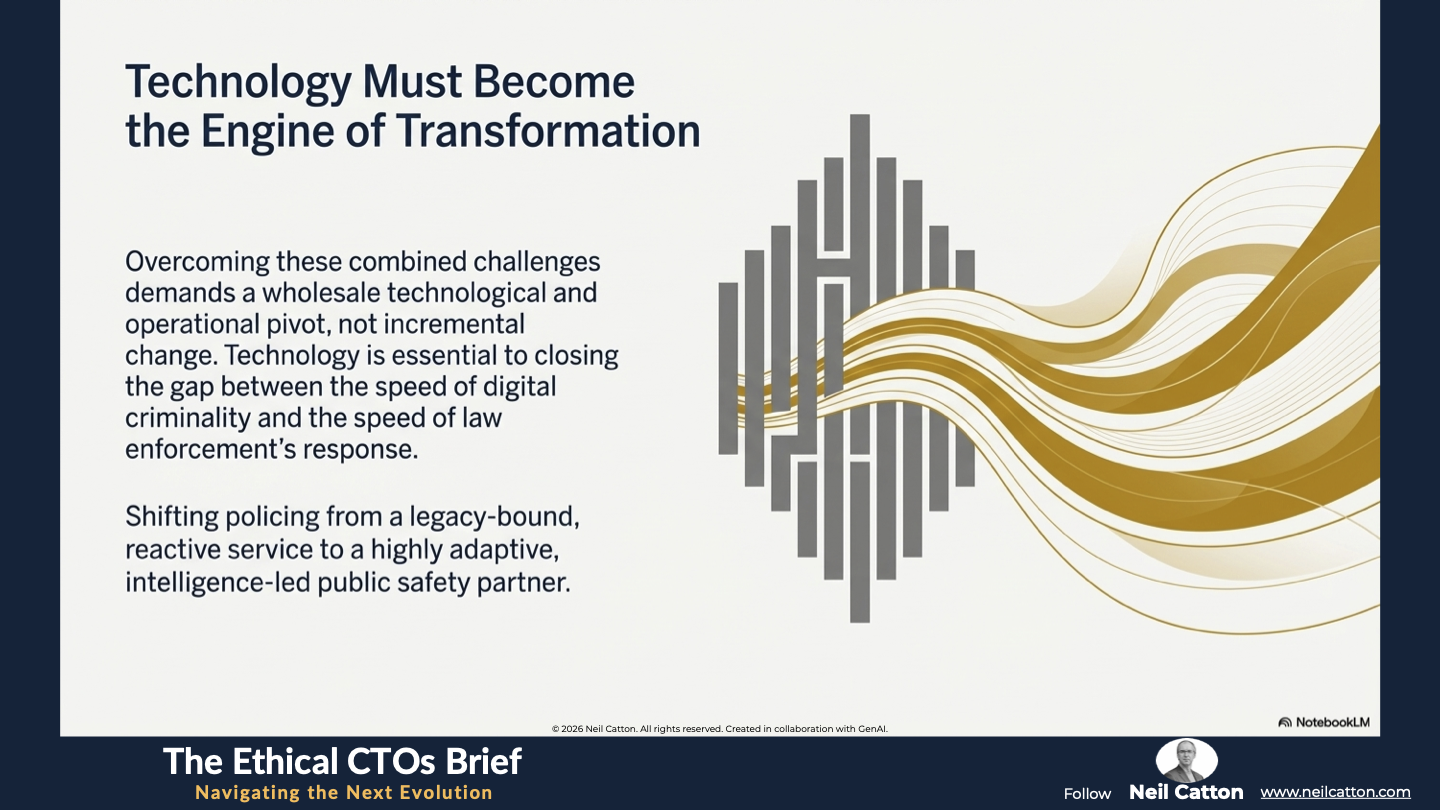
Overcoming the combined internal and external challenges facing UK policing demands a wholesale technological and operational pivot, not incremental change. Technology must become the cornerstone of this transformation, shifting policing from a legacy-bound reactive service to a highly adaptive intelligence-led public safety partner. Strategic deployment of emerging tools like Artificial Intelligence and integrated data platforms should be seen as essential to closing the gap between digital criminality’s speed and law enforcement’s response. This section outlines the critical technological investments needed to drive systemic change.
Artificial Intelligence (AI) and Machine Learning (ML)
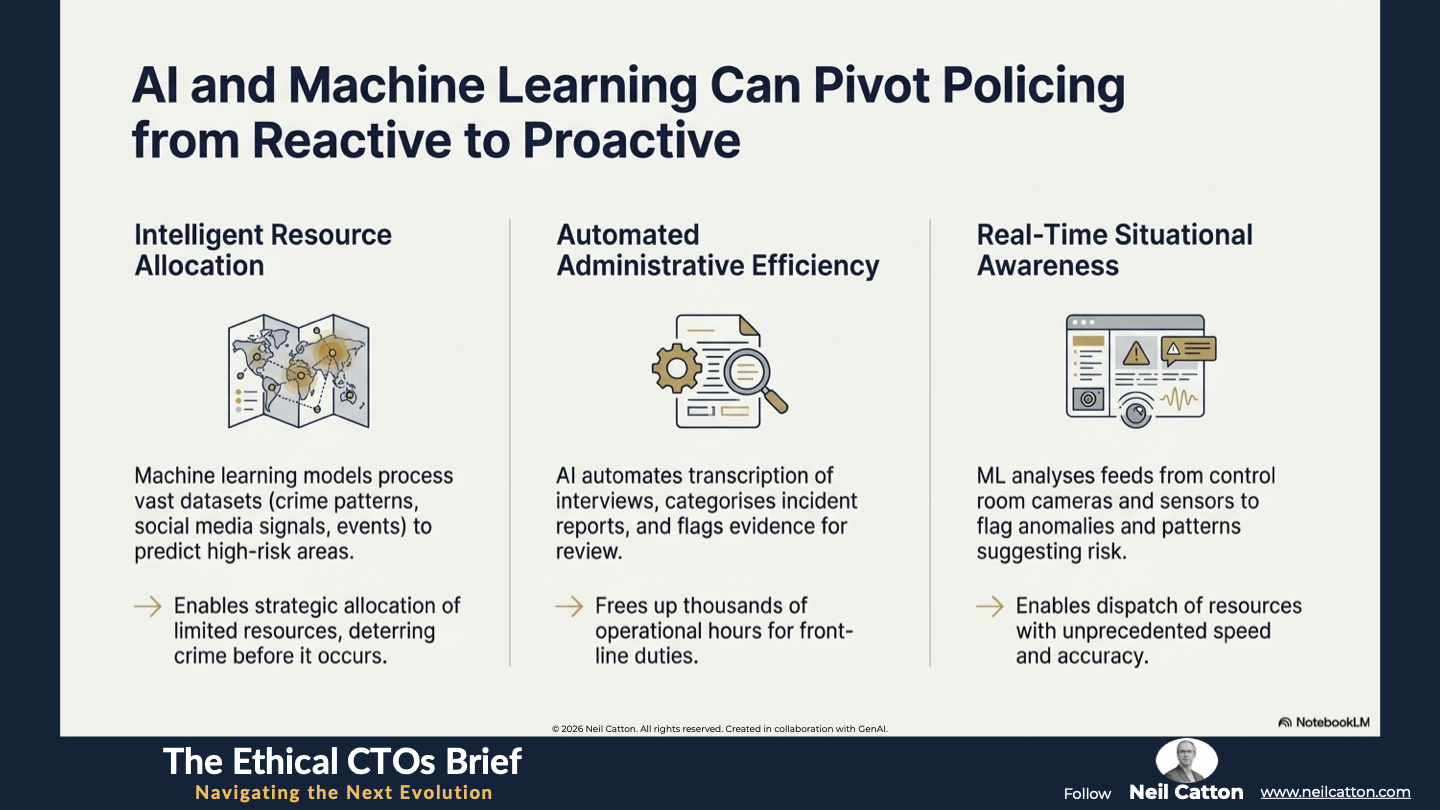
AI and ML are critical for pivoting policing from reactive to proactive and intelligence-led.
- Intelligent Resource Allocation and Predictive Policing: Advanced machine learning models can now process vast datasets. This includes historical crime patterns, real-time social media signals, event calendars and even dynamic factors like local weather. These insights enable police commanders to strategically allocate limited resources to high-risk areas at specific times. This proactive presence effectively deters crime before it occurs.
- Automated Administrative Efficiency: A substantial amount of police time is currently devoted to paperwork and bureaucracy. AI can automate transcription of interview notes, categorise incident reports and even flag evidence needing urgent human review. This could potentially free up thousands of operational hours for front-line duties.
- Real-Time Situational Awareness: Machine learning can analyse feeds from control room cameras and other sensors, flagging anomalies or patterns suggesting risk. This enables control room operators to dispatch resources with unprecedented speed and accuracy.
The Power of Integrated Data and Digital Twins
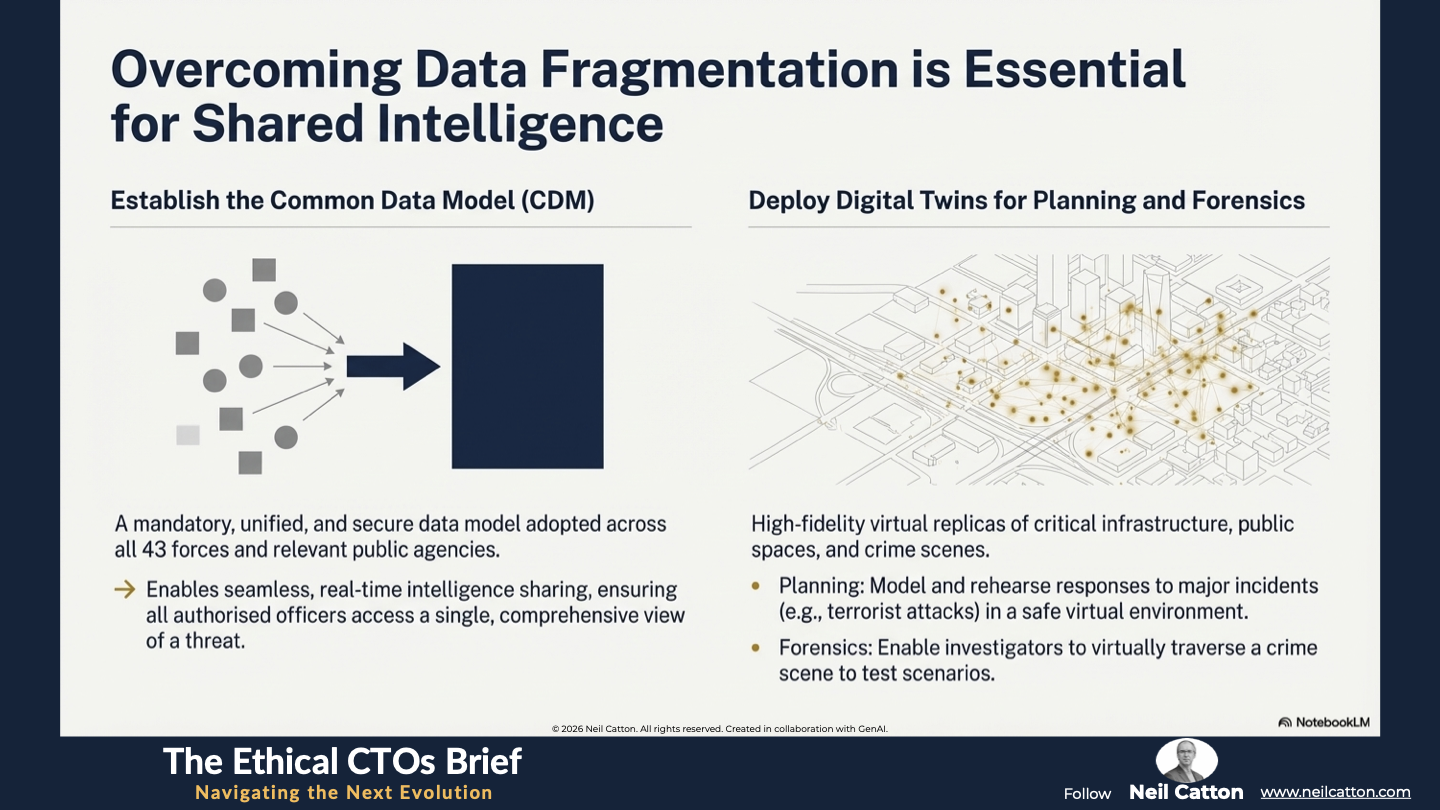
Overcoming data fragmentation is essential for shared intelligence and superior planning.
- Establishing the Common Data Model (CDM): The most significant structural change would be the mandatory adoption of a unified secure Common Data Model across all 43 forces and relevant public agencies. This standardisation would enable seamless real-time intelligence sharing ensuring authorised officers have access to the same most accurate information.
- Digital Twins for Planning and Forensics: Creating high-fidelity virtual replicas, or Digital Twins, of critical infrastructure, densely populated public spaces and even intricate crime scenes provides significant value. Police can utilise these replicas to model major incident responses like terrorist attacks or large-scale public order situations. This allows them to rehearse crowd control and test resource deployment strategies in a safe environment. Additionally, Digital Twins can aid forensic reconstruction, enabling investigators to virtually traverse a crime scene multiple times with various scenarios.
- Leveraging IoT and Sensor Data: The explosion of the Internet of Things (IoT), encompassing smart traffic lights and home security cameras, generates a wealth of data. Ethically integrating and analysing this sensor data offers powerful real-time intelligence for locating missing people, monitoring high-risk areas, and identifying environmental hazards.
Digital Ethics, Accountability, and Bias Mitigation
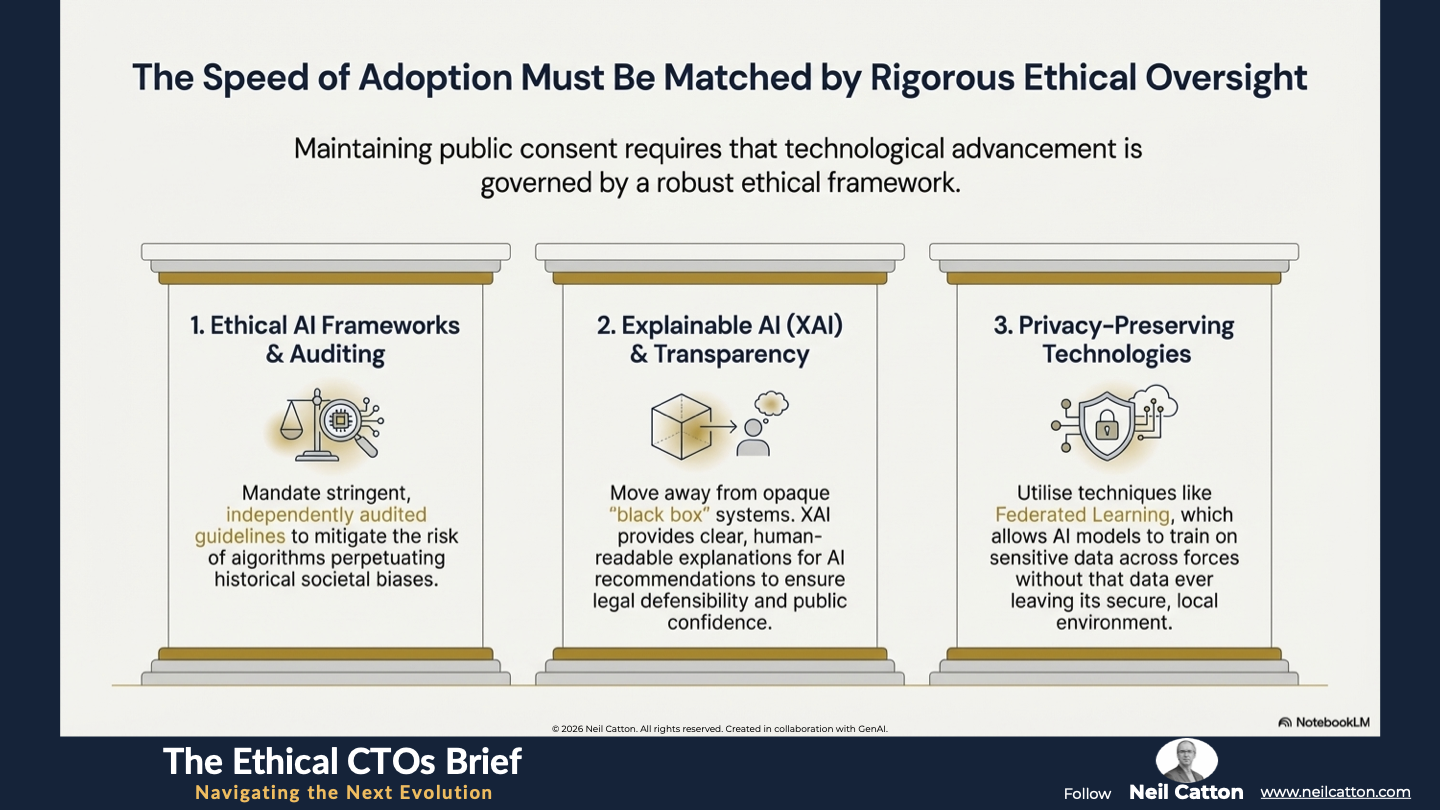
The speed of technological adoption must be matched by rigorous ethical oversight to maintain public consent.
- Ethical AI Frameworks and Auditing: The deployment of any AI-driven tool like automated risk scoring necessitates stringent independently audited ethical guidelines. Policing must actively mitigate the risk of algorithms perpetuating or amplifying historical societal biases in training data. This demands a proactive approach to data cleaning and continuous model evaluation.
- Explainable AI (XAI) and Transparency: To maintain public confidence and ensure legal defensibility, officers need to understand why an AI tool made a specific recommendation. This requires tools with Explainable AI features that offer clear, human-readable explanations, moving away from opaque “black box” systems.
- Privacy-Preserving Technologies (Federated Learning): To address sensitive privacy concerns, the UK should investigate technologies like Federated Learning. This approach enables an AI model to be trained collaboratively across multiple police forces using their local, sensitive data. Importantly, this data remains within the force’s secure jurisdictional environment, ensuring model effectiveness while rigorously protecting citizen privacy.
Building the Triple-Helix Resilience Model
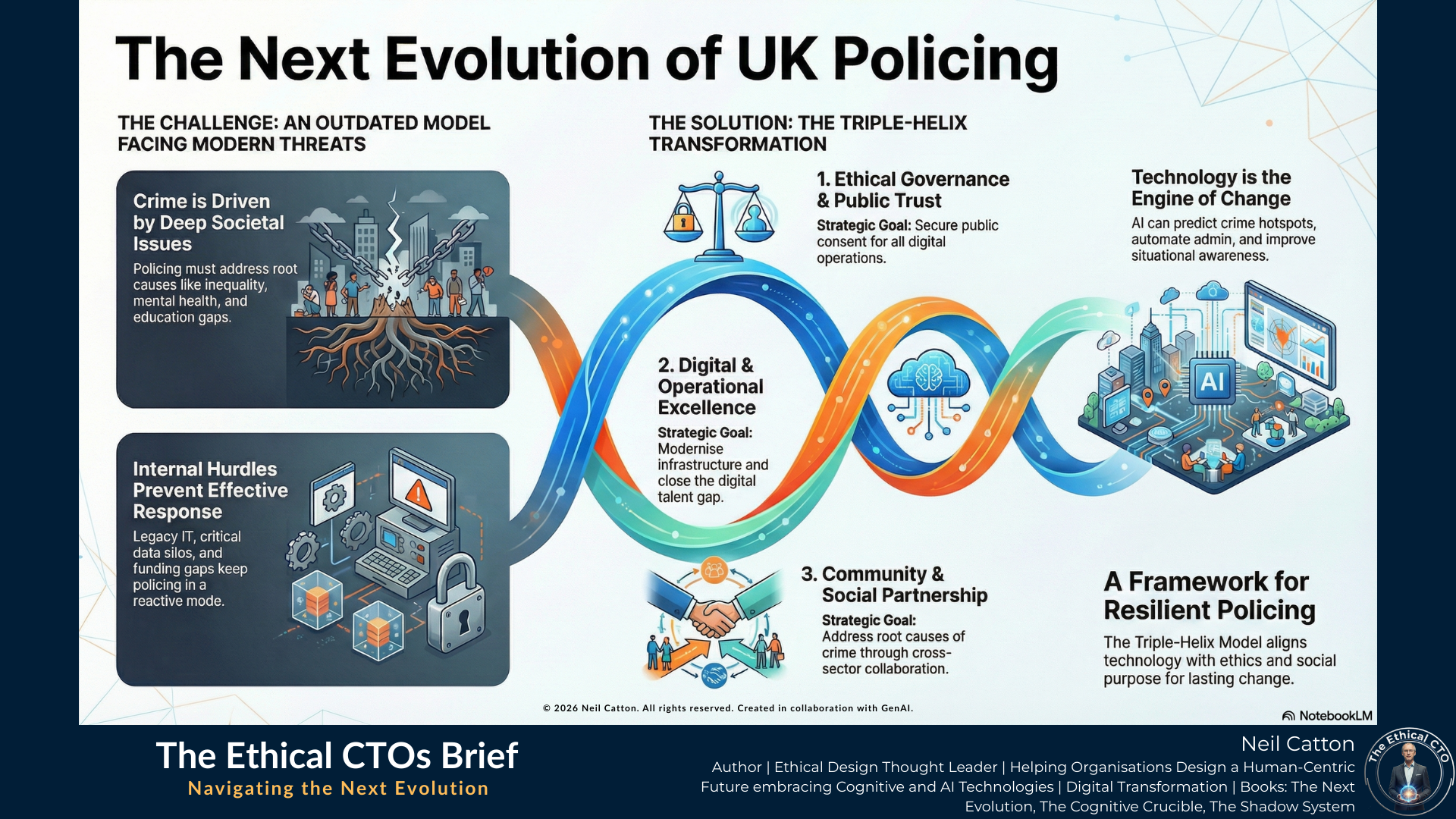
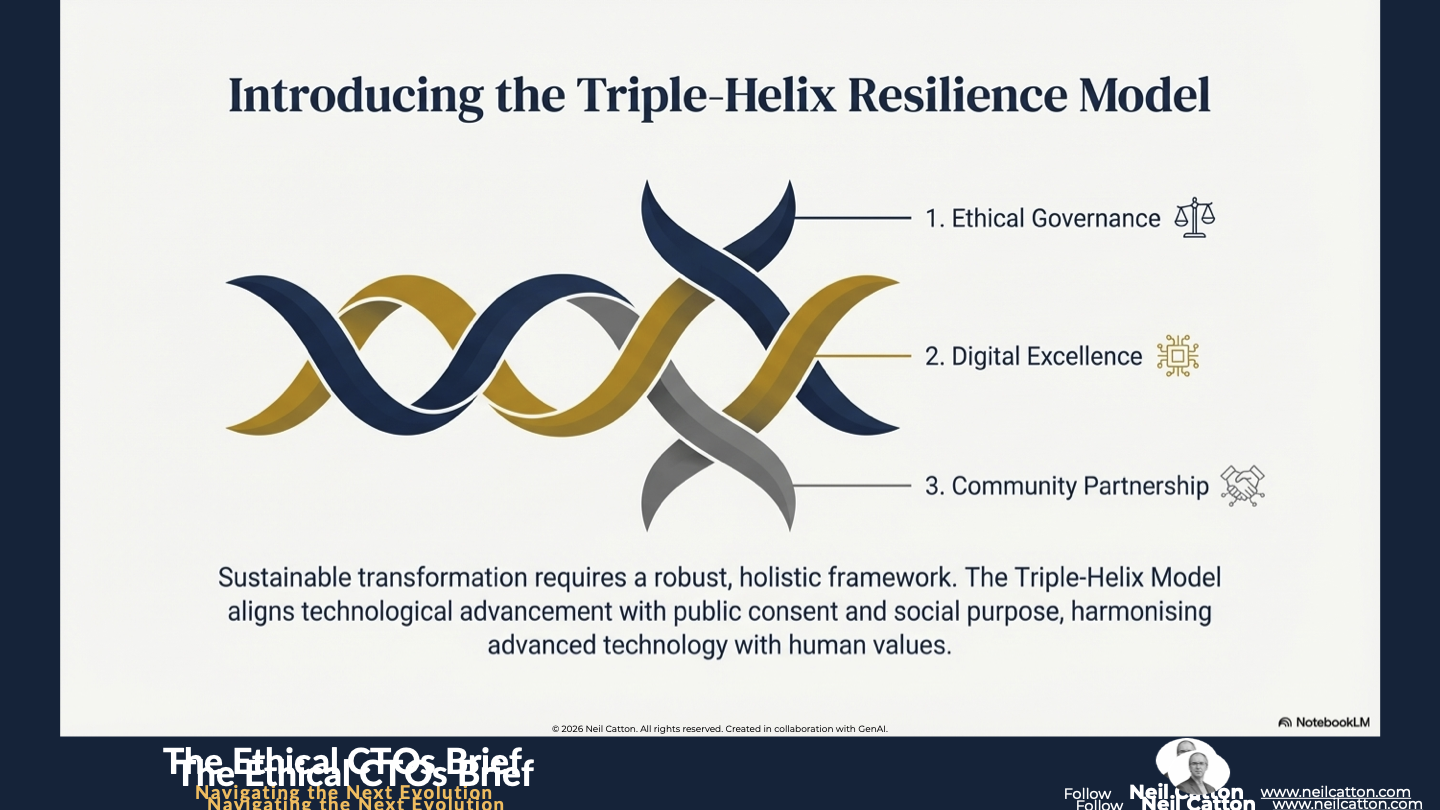
Sustainable and successful transformation demands moving beyond isolated projects or single technological adoptions. True structural change requires a robust holistic framework that consistently aligns technological advancement with public consent and social purpose. The Triple-Helix Resilience Model provides this essential framework. It defines a strategy centred on three interwoven and mutually reinforcing strategic pillars: Ethical Governance, Digital Excellence and Community Partnership. This model establishes the necessary structure to harmonise advanced technology with human values ensuring the police service evolves justly, accountably and effectively in partnership with its communities. This model ensures that technological adoption (Helix 2) is always guided by ethical considerations (Helix 1) and strategically aligned with social outcomes (Helix 3).
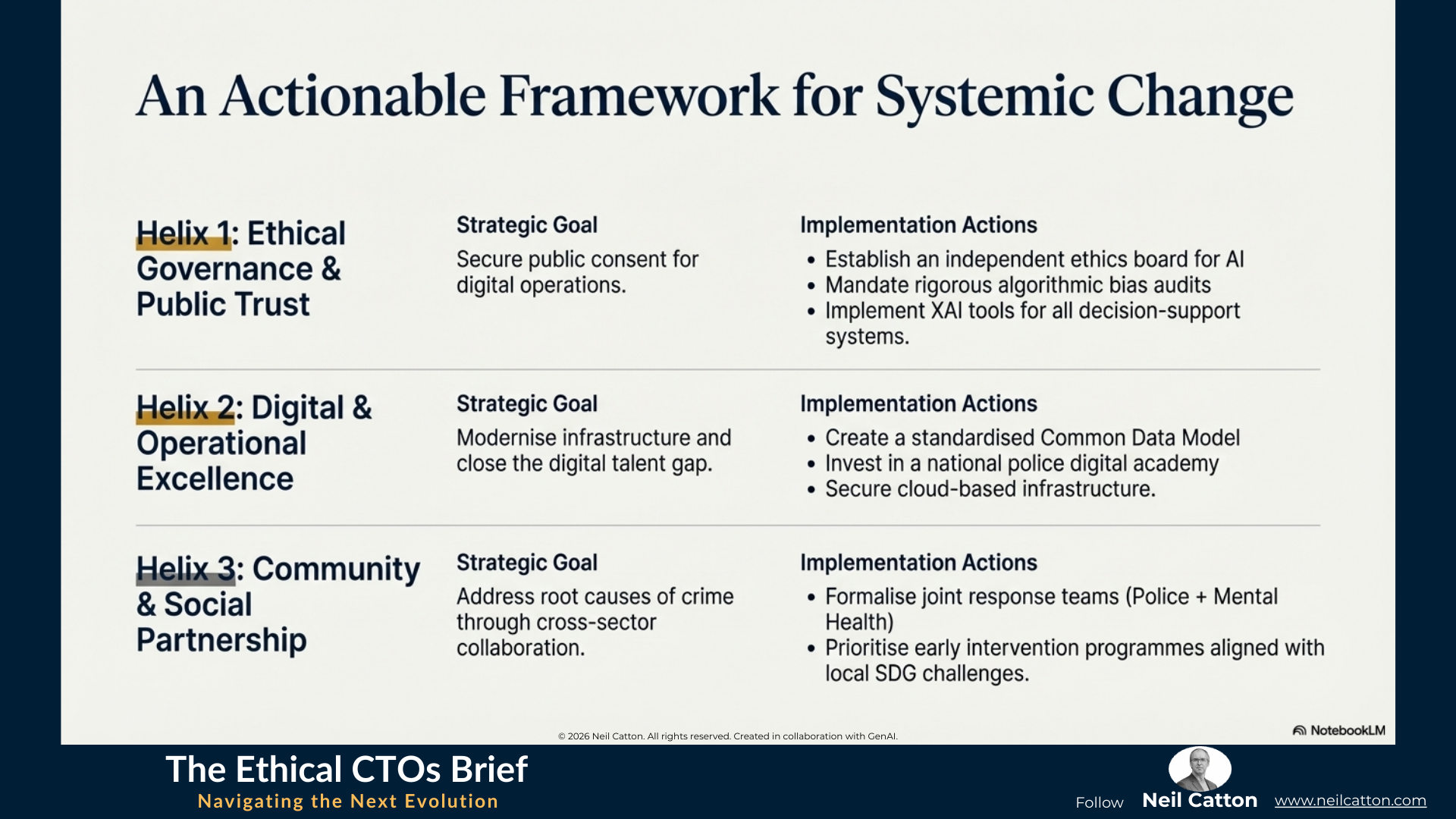
Helix | Focus Area | Strategic Goal | Implementation Actions |
1. Ethical Governance and Public Trust | Accountability & Legitimacy | Secure public consent for digital operations. | Establish an independent ethics board for AI/ML deployment; Mandate rigorous algorithmic bias audits; Implement XAI tools for all decision-support systems. |
2. Digital and Operational Excellence | Capacity & Capability | Modernise infrastructure and close the digital talent gap. | Create a standardised Common Data Model; Invest in a national police digital academy; Secure cloud-based infrastructure for rapid digital forensics. |
3. Community and Social Partnership | Prevention & Intervention | Address root causes of crime through cross-sector collaboration. | Formalise joint response teams (Police + Mental Health/Social Services); Prioritise early intervention programmes aligned with local SDG challenges; Enhance public-facing digital literacy campaigns. |
A Final Word
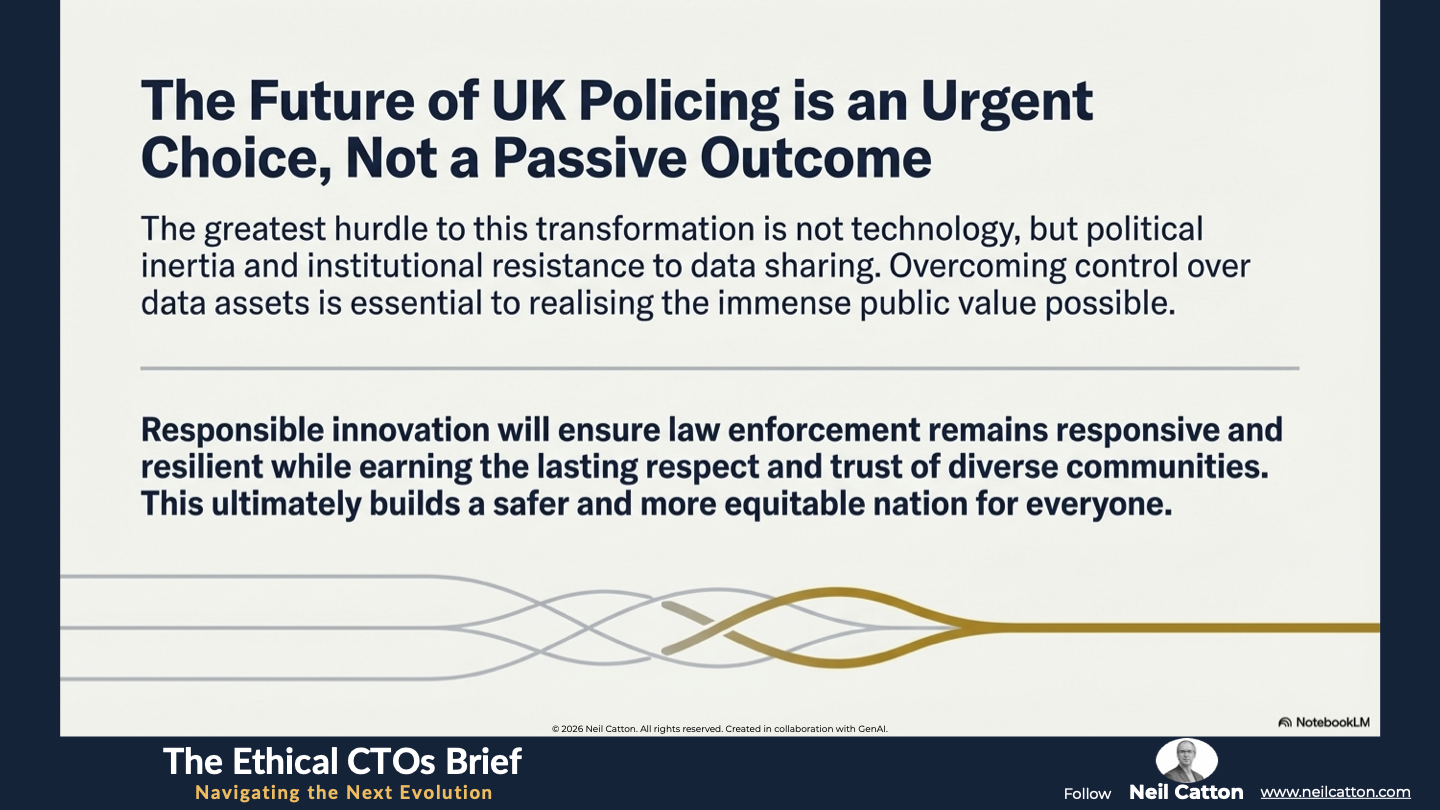
The future of UK policing isn’t a passive outcome; it’s a crucial and urgent choice at this pivotal moment. The sophisticated and compounding challenges facing law enforcement – the increasing complexity of cybercrime, the need to rebuild public trust and the fundamental requirement to tackle societal inequality – demand a comprehensive and proactive approach. This necessitates an operational strategy that’s both technologically innovative and morally grounded in a deep commitment to public service.
Achieving Triple-Helix Resilience demands unprecedented political commitment. The UK public service landscape transformation faces its biggest hurdle in political inertia and data ownership. Control over valuable assets like data translates to budget and power, making overcoming these political and institutional barriers essential for realising the immense public value possible.
Investing in the right digital tools, rigorously training personnel and embedding a robust ethical framework at the heart of every operation are key to overcoming UK policing’s current limitations. Responsible innovation will ensure law enforcement remains responsive and resilient while earning the lasting respect and trust of diverse communities. This ultimately builds a safer and more equitable nation for everyone.
Key Takeaways: Architecting Future Public Safety
Ethical Governance: Securing public consent through independent AI ethics boards and algorithmic bias audits.
Digital Excellence: Modernizing infrastructure with a National Police Digital Academy and cloud-based forensics.
Community Partnership: Moving from containment to prevention by aligning with Sustainable Development Goals (SDGs).
The Trust Anchor: Using Explainable AI (XAI) to ensure procedural fairness and transparency in automated decisions.


1
2
3
4
5
6
7
8
9
10
11
12
13
14
Strategic Insights: Fighting 21st-Century Crime with 21st-Century Tools
The Latency Crisis: Why "Institutional Latency" is the greatest advantage for modern criminal syndicates.
Predictive Asset Allocation: Using ML to deploy resources to high-risk areas before incidents occur.
Digital Twins for Forensics: Creating virtual replicas of infrastructure for incident modeling and forensic reconstruction.
Federated Learning: Training AI models collaboratively across forces while keeping sensitive data within secure local jurisdictions.
Video Summary: Catching Bad Guys and Building Resilient Communities
The Breaking Point: Why incremental change is no longer enough to address the complexity of globalized crime.
The SDG Nexus: Addressing poverty, mental health, and the digital divide as core components of a crime prevention strategy.
Political Will vs. Data Ownership: Why the biggest barrier to progress is political inertia and departmental hoarding.
The Human-Centric Choice: Ensuring justice remains structurally sound and accountable in an algorithmic age.
Modernising the precinct is just the beginning. In a converged world where crime is non-territorial, the force itself must become a borderless network. This is the zenith of our journey: Designing the Future-Ready Force.
The Ethical CTO: Arc 2 Index
- The Speed of Change: Governing the Tempo
- Where Policy Fails: The Governance Gap
- The Strategic Bridge: Closing the Gap
- Breaking the Structural Barriers : Data Silos
- The new OS of Society: Governing the Algorithmic State
- The human cost of exclusion: The Algorithmic Abyss
- Designing for Civic Agency: The Ethical Architect
- Trust in the age of AI: Policing at an Inflection Point
- The zenith of converged security: Designing the Future-Ready force