Book I · The Next Evolution · How To · No. 25
Shape Your Networked Self
For when the version of you online no longer feels like a decision you made.
The version of you that exists across platforms and communities needs its own deliberate shape, not whatever each network defaults to.

Alex has four different names for four different rooms — one on LinkedIn, one on a gaming server, one under an old university nickname nobody uses any more, and one that's just a photo and a bio nobody wrote carefully. None of them are lies, exactly. Each one just answers to a different audience, a different algorithm, a different version of what seemed safe to say at the time.
Coherence isn't the same as sameness. But somewhere between the tenth platform and the thirtieth persona, most people stop choosing who they are online and start absorbing whatever each network defaults to. The platforms didn't ask for permission to shape that. Nobody had to grant it — the shaping just happened, one default setting and one algorithmic nudge at a time, until the version of Alex that shows up somewhere wasn't really a decision at all.
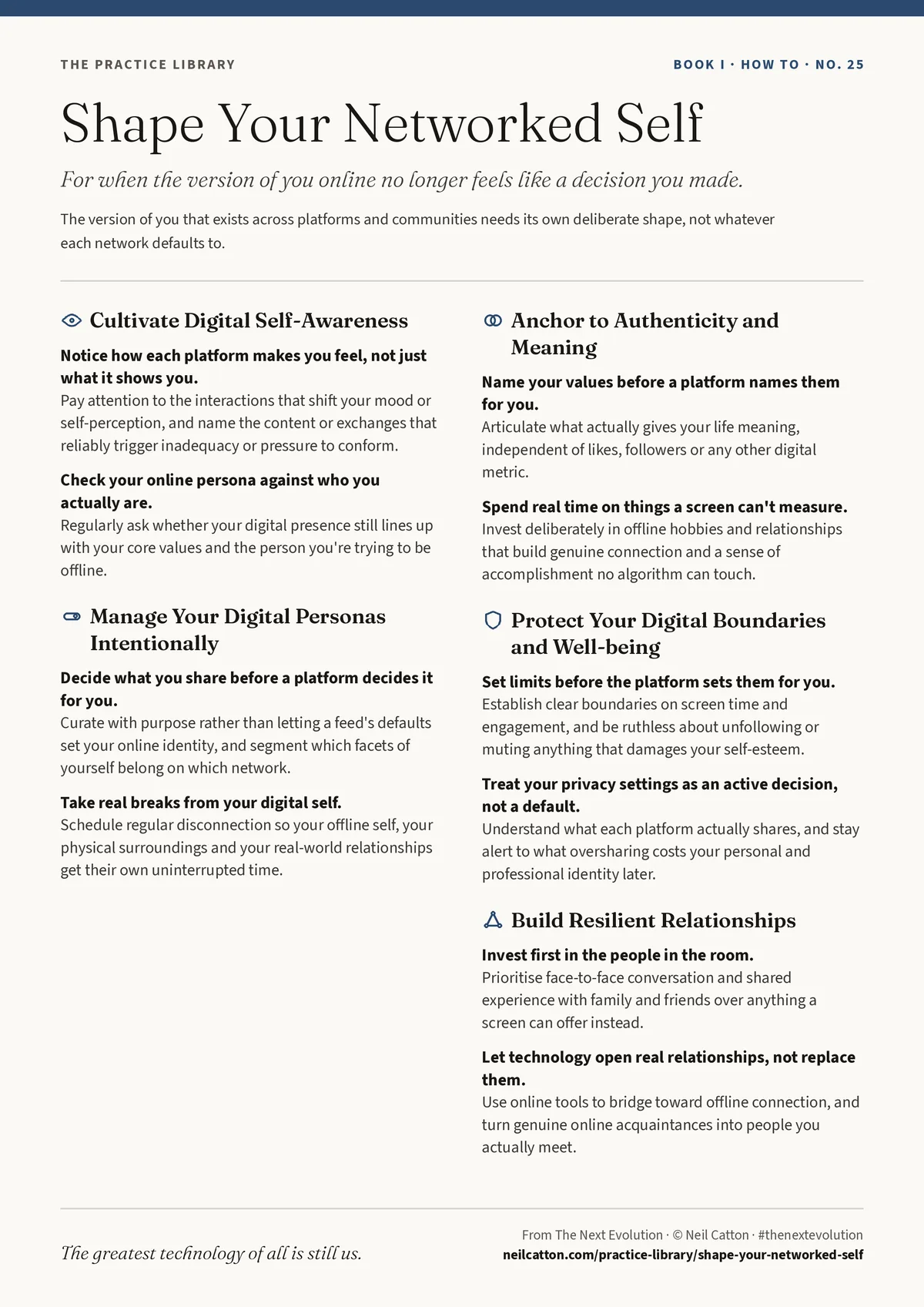
The card sets out five practice areas, from noticing what a platform's mood-shifts are actually telling you to rebuilding the real-world relationships technology was only ever meant to support. It's written for anyone who's stopped noticing how many versions of themselves they're currently running.
It comes from The Next Evolution, where the fuller argument about identity, technology and coherence gets made at length. The card doesn't need the book to make sense — it stands on its own.
Print it, or send it to whoever's about to open their fifth tab of the day without noticing they did.
If nobody built your online self on purpose, who actually did?
Shape Your Networked Self
Cultivate Digital Self-Awareness
- Notice how each platform makes you feel, not just what it shows you. Pay attention to the interactions that shift your mood or self-perception, and name the content or exchanges that reliably trigger inadequacy or pressure to conform.
- Check your online persona against who you actually are. Regularly ask whether your digital presence still lines up with your core values and the person you're trying to be offline.
Manage Your Digital Personas Intentionally
- Decide what you share before a platform decides it for you. Curate with purpose rather than letting a feed's defaults set your online identity, and segment which facets of yourself belong on which network.
- Take real breaks from your digital self. Schedule regular disconnection so your offline self, your physical surroundings and your real-world relationships get their own uninterrupted time.
Anchor to Authenticity and Meaning
- Name your values before a platform names them for you. Articulate what actually gives your life meaning, independent of likes, followers or any other digital metric.
- Spend real time on things a screen can't measure. Invest deliberately in offline hobbies and relationships that build genuine connection and a sense of accomplishment no algorithm can touch.
Protect Your Digital Boundaries and Well-being
- Set limits before the platform sets them for you. Establish clear boundaries on screen time and engagement, and be ruthless about unfollowing or muting anything that damages your self-esteem.
- Treat your privacy settings as an active decision, not a default. Understand what each platform actually shares, and stay alert to what oversharing costs your personal and professional identity later.
Build Resilient Relationships
- Invest first in the people in the room. Prioritise face-to-face conversation and shared experience with family and friends over anything a screen can offer instead.
- Let technology open real relationships, not replace them. Use online tools to bridge toward offline connection, and turn genuine online acquaintances into people you actually meet.
The greatest technology of all is still us.
From The Next Evolution · © Neil Catton · Filed under identity and reputation
Read it alongside
 Also from The Next Evolution · No. 27Navigate the Geopolitics of Technology and Global GovernanceFor when a technical standard turns out to be a foreign policy decision nobody voted on.
 Also from The Next Evolution · No. 22Design Digital Humans with IntentionFor when the voice on the other end of a public service turns out not to be a person, and no one thought to say so.
 Also from The Next Evolution · No. 29Reclaim Your EngagementFor when you look up and can't remember choosing to scroll this far.