Book II · The Cognitive Crucible · Pause to Reflect · No. 54
Building Digital Resilience
For the week before the breach, not the week after.
Security gets built in the calm, not scrambled together in the crisis. This pause is about the habits that hold before either arrives.

Nobody plans the day their account gets compromised. It arrives as an email that looks almost right, a login alert from a country they've never visited, a call from someone claiming to be the bank. Whatever gets built to handle it gets built in the panic, because almost nobody builds it before.
The habits that actually hold — the audit, the password manager, the second factor turned on before it's needed — are unglamorous enough that most people put them off until the moment they can't.
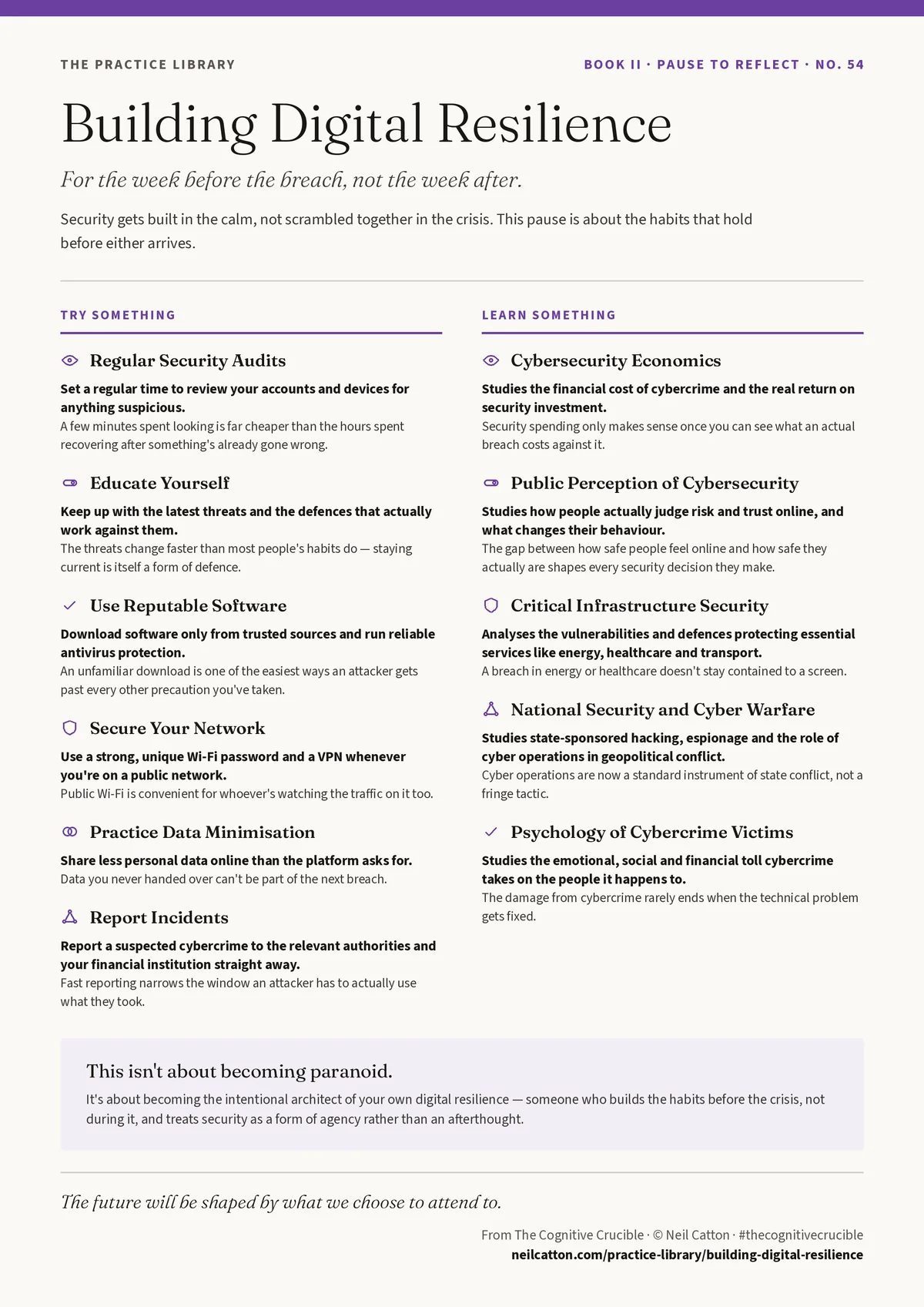
The card splits into two columns — six things to try, from running a regular account audit to knowing exactly who to report a suspected cybercrime to, and five research threads for anyone who wants the bigger picture, from the economics of cybercrime to the psychology of what it does to the people it happens to. It's for anyone who's been meaning to sort their passwords out for a while now.
It comes from The Cognitive Crucible, where the fuller argument about the systems shaping our digital lives — and our responsibility inside them — lives. The card stands on its own — you don't need the book to use it.
Print it, pin it somewhere you'll actually see it, or send it to whoever still uses the same password for everything.
Which habit on this list have you been meaning to build, and what's actually stopped you so far?
Building Digital Resilience
Try Something
Regular Security Audits
- Set a regular time to review your accounts and devices for anything suspicious. A few minutes spent looking is far cheaper than the hours spent recovering after something's already gone wrong.
Educate Yourself
- Keep up with the latest threats and the defences that actually work against them. The threats change faster than most people's habits do — staying current is itself a form of defence.
Use Reputable Software
- Download software only from trusted sources and run reliable antivirus protection. An unfamiliar download is one of the easiest ways an attacker gets past every other precaution you've taken.
Secure Your Network
- Use a strong, unique Wi-Fi password and a VPN whenever you're on a public network. Public Wi-Fi is convenient for whoever's watching the traffic on it too.
Practice Data Minimisation
- Share less personal data online than the platform asks for. Data you never handed over can't be part of the next breach.
Report Incidents
- Report a suspected cybercrime to the relevant authorities and your financial institution straight away. Fast reporting narrows the window an attacker has to actually use what they took.
Learn Something
Cybersecurity Economics
- Studies the financial cost of cybercrime and the real return on security investment. Security spending only makes sense once you can see what an actual breach costs against it.
Public Perception of Cybersecurity
- Studies how people actually judge risk and trust online, and what changes their behaviour. The gap between how safe people feel online and how safe they actually are shapes every security decision they make.
Critical Infrastructure Security
- Analyses the vulnerabilities and defences protecting essential services like energy, healthcare and transport. A breach in energy or healthcare doesn't stay contained to a screen.
National Security and Cyber Warfare
- Studies state-sponsored hacking, espionage and the role of cyber operations in geopolitical conflict. Cyber operations are now a standard instrument of state conflict, not a fringe tactic.
Psychology of Cybercrime Victims
- Studies the emotional, social and financial toll cybercrime takes on the people it happens to. The damage from cybercrime rarely ends when the technical problem gets fixed.
The future will be shaped by what we choose to attend to.
From The Cognitive Crucible · © Neil Catton · Filed under security and safety
Read it alongside
 Also from The Cognitive Crucible · No. 56Envisioning Your RoleFor when it's easier to critique the system than decide what to do inside it.
 Also from The Cognitive Crucible · No. 51Rebuilding Common GroundFor when a conversation that should have taken five minutes turns into something neither of you can walk back from.
 Also from The Cognitive Crucible · No. 57Take a Moment to ActFor the moment you realise every pause in this series has been building toward one thing.